


SweetloreEncyclopedia of World Sweets (834)

Wingko Babat
Wingko babat
A baked coconut sweet that traveled in train-themed wrappers
Desserts / Indonesia: East Java and Semarang

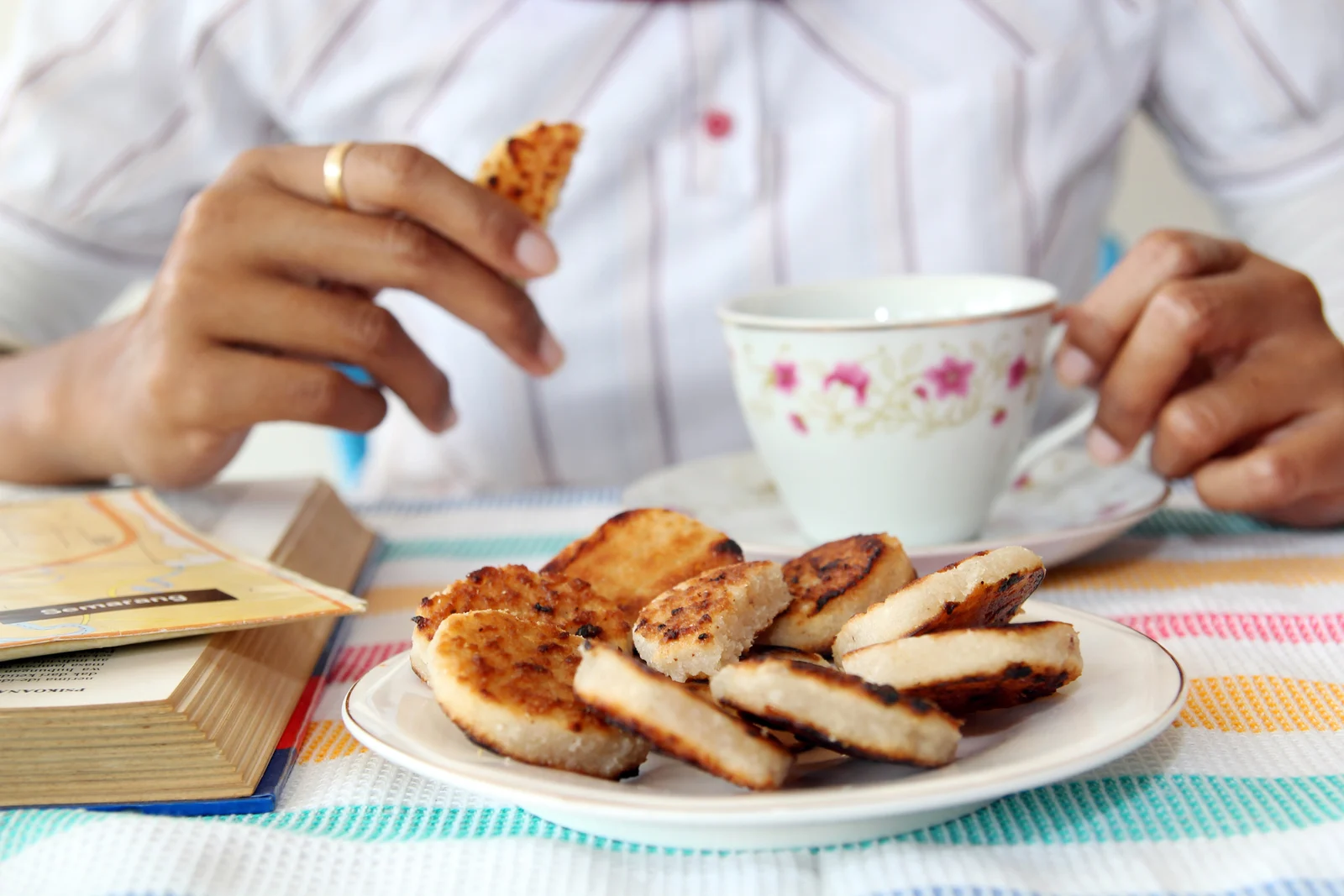
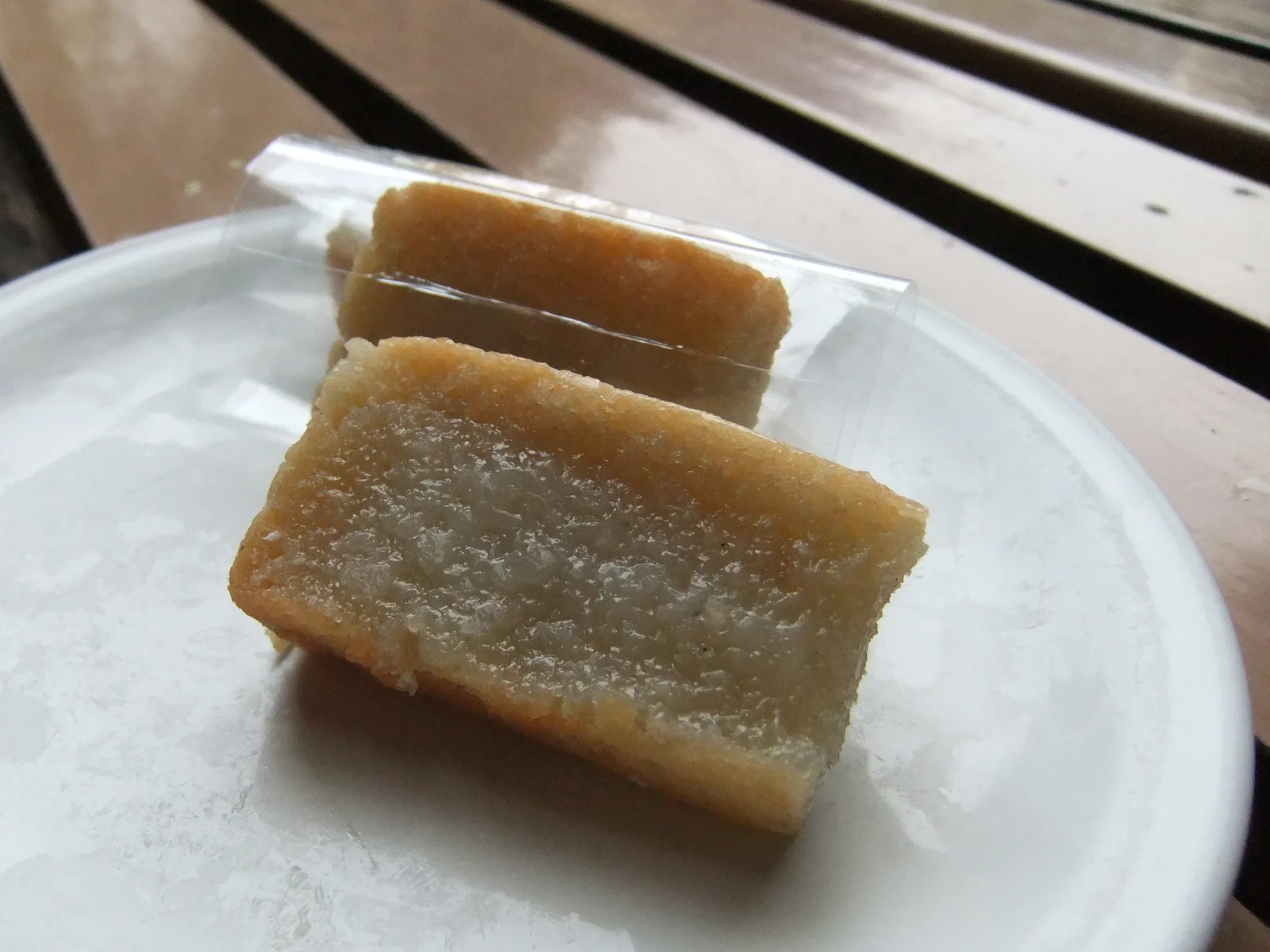
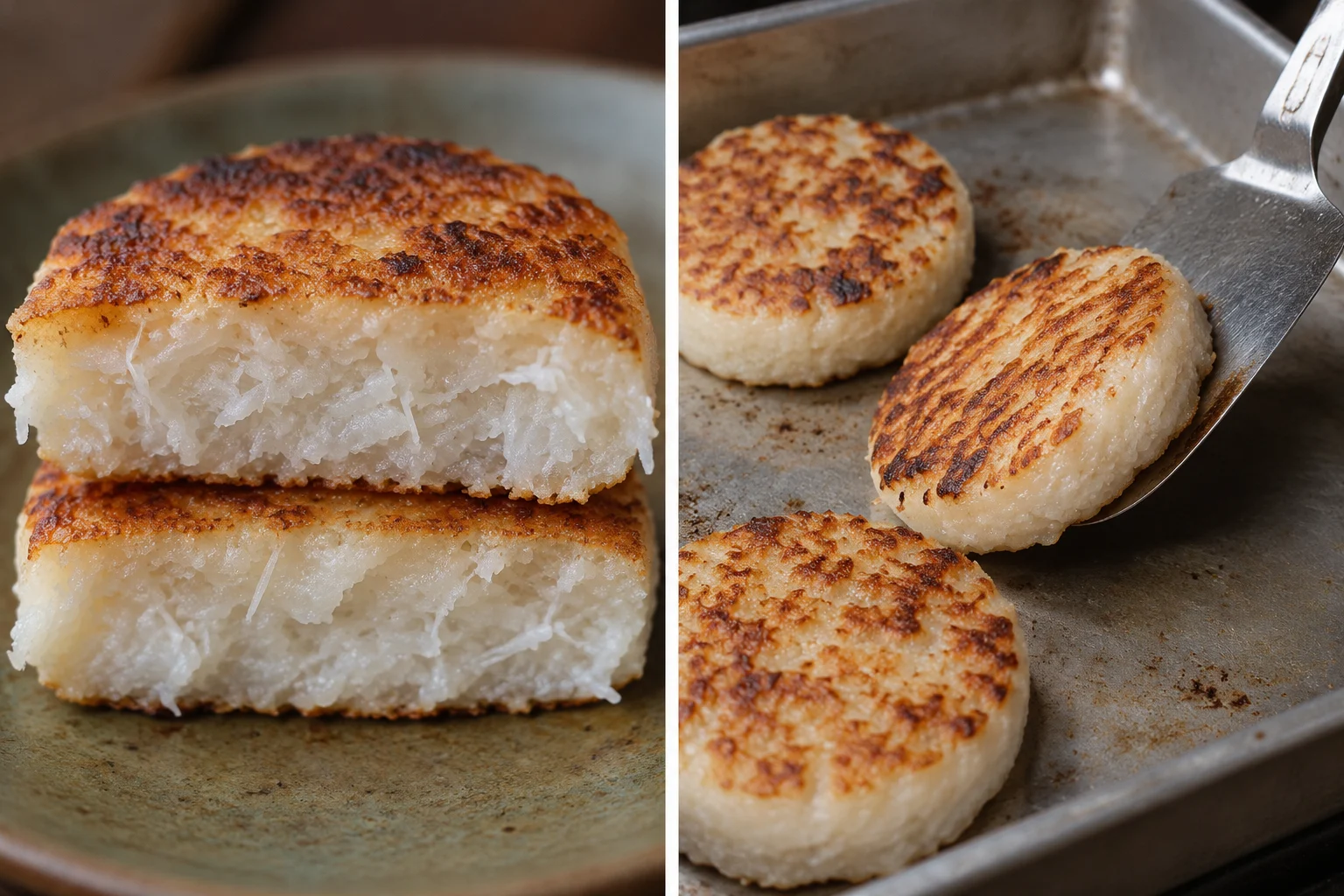
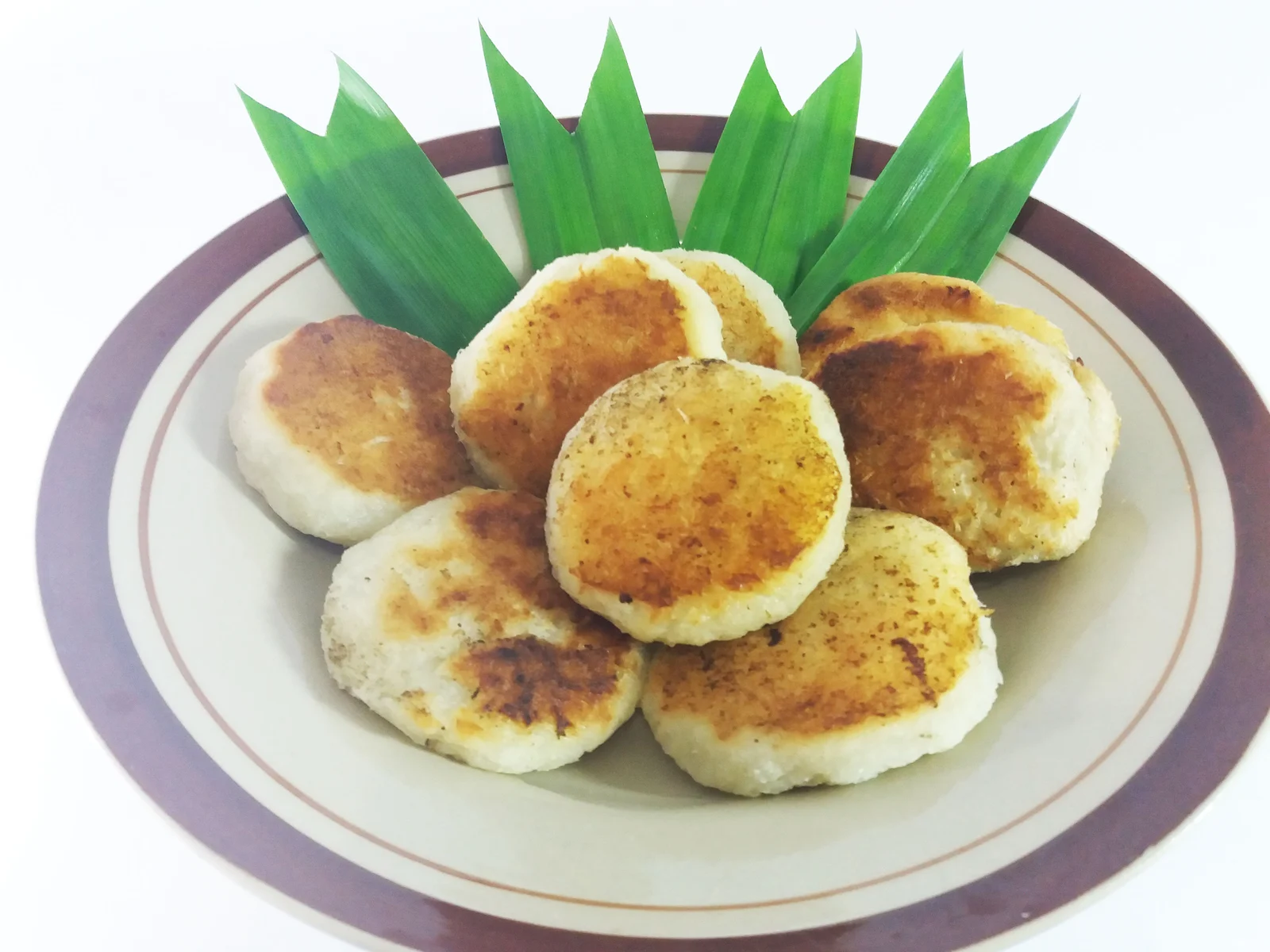
The surface is browned, and the inside looks pale when seen from the side. In the mouth, shreds of coconut fiber can be felt within a dough held together by glutinous rice flour. Wingko babat is a Javanese sweet in which coconut flesh is bound with glutinous rice flour and sugar and then baked. Its name preserves Babat, a town in East Java, but it is also known in Semarang, to the west, as a souvenir wrapped in paper. Looking at how the flesh and flour are combined before baking, and how each baked round is wrapped, connects the preparation and trade that continued in the two places.
Grating the Coconut Flesh and Mixing in the Sugar First
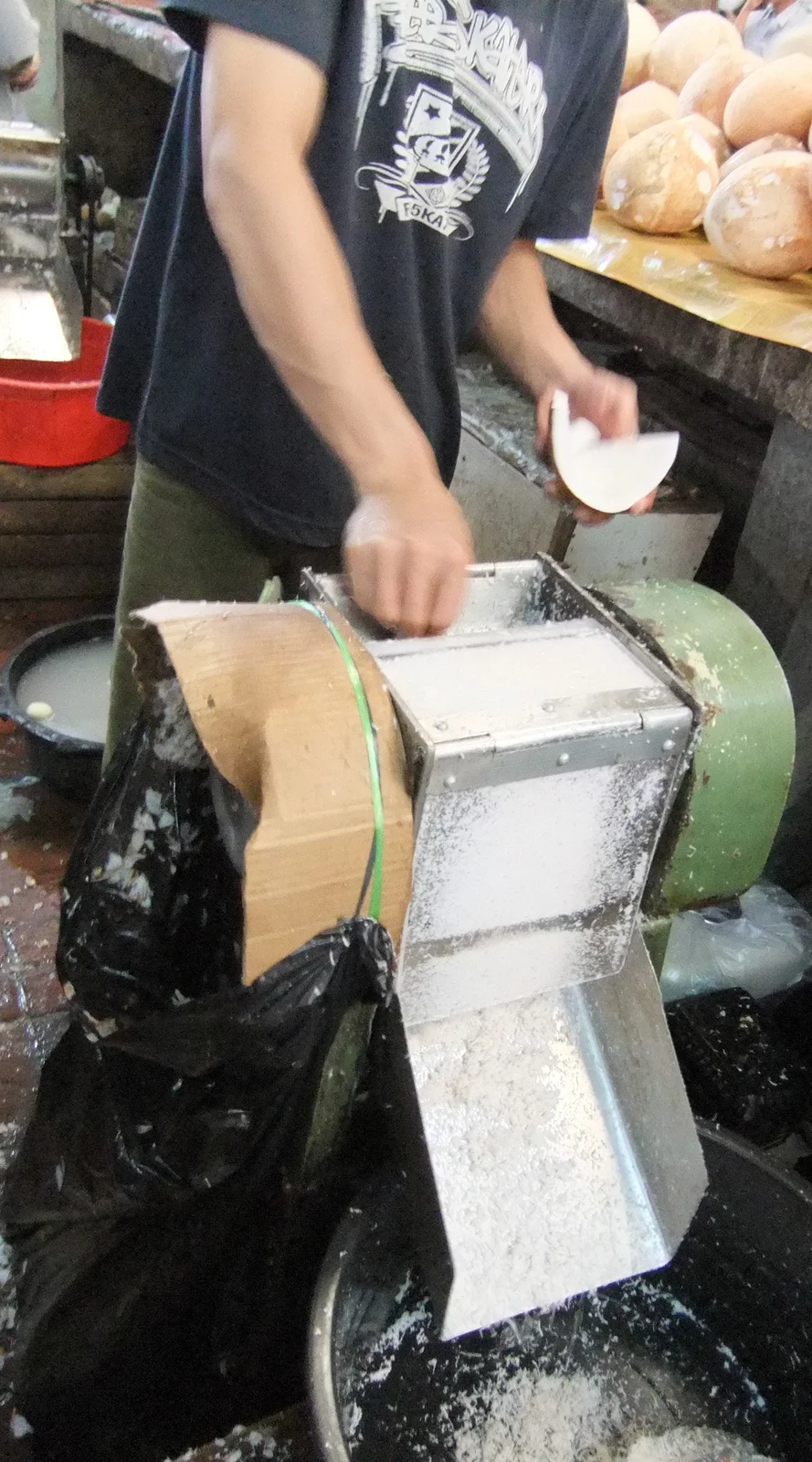
A 2013 report that examined the Loe Lan Ing workshop in Babat describes the work as divided among those who remove the shell and prepare the flesh, those who grate the flesh, and those who grind the glutinous rice. To make the dough, sugar is added to the grated flesh, and the glutinous rice flour is added once the mixture has softened. Unlike a version that uses only the liquid squeezed from the flesh, this method puts the grated fibers into the dough as well. Because the flour is added after checking how moist the flesh has become at this stage, the moisture before the flour goes in also serves as a cue. In variations that change the flavor with fruit, the fruit is combined with the coconut and sugar before the flour.
The recipe table from the interviews lists 1 kilogram of glutinous rice flour, six young coconuts, 1.5 kilograms of sugar, 300 grams of butter, and two tablespoons of flavoring. Because the amount of coconut flesh is determined by the number of nuts, the size of each nut and the water it contains change how the dough feels. If the dough becomes too stiff, the workshop adds the coconut water from inside the nut a little at a time. Semarang also has examples that use coconut milk pressed from the flesh as an ingredient, but the liquid the workshop adds to loosen the dough is the water that was inside the nut. The grated flesh, the pressed milk, and the water that was in the nut do not play the same role in the sweet.
In a practical session at a municipal vocational school in Yogyakarta, the brown skin is removed from one medium-ripe coconut, and the white flesh is grated into long strands. 250 grams of sugar is combined with salt and vanilla and worked for about 30 minutes until liquid comes out, and then 150 grams of glutinous rice flour is mixed in. After that, two whisked eggs are added. The workshop’s standard recipe table lists no eggs. Both versions begin by combining the grated flesh and sugar, but the workshop adjusts the moisture after adding the flour with coconut water, while the school session adds whisked eggs, so the two bring the dough together before baking by different methods.
The workshop told the survey that since the 1950s it has used a machine for grating the flesh and a machine for milling glutinous rice into flour. Because the two ingredients are first reduced separately, the length at which the flesh is left and the fineness to which the rice is ground can be handled independently. The school session’s instruction to grate the flesh in long strands also concerns a step whose effect remains when the sweet is eaten after baking. The fine glutinous rice flour serves to bind the moist flesh. When a piece is bitten, even if it looks like a uniform dough, the thin strands of flesh touch the teeth.
Following the workshop’s process chart, the flesh mixed with sugar, the mixture after the glutinous rice flour is added, and the dough shaped in a round mold appear in separate photographs. If the dough is stiff, water is added in several portions, and its feel is adjusted after the flour goes in, so work can proceed even when the moisture released from grating the coconut differs each time. At the school, the flour is added after about 30 minutes of kneading has drawn moisture out of the flesh, so the point at which the moisture is judged is also a difference in method.
Rounds Turned and Baked One by One, Pieces Baked on a Tray and Divided
At the Babat workshop, the mixed dough is shaped in round molds of several sizes and baked in a furnace fired with firewood and coconut shells. It is cooked about halfway at first, then turned over and returned to the furnace. Because each round is shaped individually, each has an edge from the start, and when it is turned, the side that had been on top also receives heat. At the time of the survey, the basic flavor came in diameters of 5 cm and 25 cm, and the flavored variants were 15 cm. The small ones were sold twenty to a bag, and the large rounds were also chosen as wedding gifts. The account also records the sequence of not wrapping immediately after baking but wrapping after cooling, using a transparent wrapper and white paper with a label.
A school practical session dealing with the same sweet lines a 25-cm square pan with paper, greases it with margarine, and spreads the dough to a thickness of about 1 cm. It is baked in an oven until the top turns yellowish brown, then cooled, cut into 5-cm squares, and wrapped in paper. When it is baked as a slab, the outer perimeter touches the pan before baking, and the sides of a piece from the middle appear only when the knife goes in. Even at a similar size of about 5 cm, a round turned one at a time and a square cut from a cooled slab differ in which surfaces are exposed after the top has been baked.
Whereas small rounds of about 5 cm come twenty to a bag, a single round 25 cm in diameter can be given as a gift as one large piece. The workshop’s survey report states that, at the time of the interviews, a bag of small pieces and a single large piece cost the same. This is not a record that the weights were equal. It shows that, even for the same basic flavor, the shop offered both small portions to divide at home and a large single piece to hand over at occasions such as weddings. In addition, the flavored 15-cm product was prepared in a size separate from the basic round.
An article from Airlangga University that asked about the workshop lists a deeply browned, fragrant surface and a soft interior as its strengths. It reports that when the glutinous rice flour that arrived was of different quality, the dough did not hold together adequately and the way it cooked also changed. The yellowish brown in the school session is another guide to baking the surface. Besides the basic pandan-coconut flavor, the workshop survey mentions durian, jackfruit, strawberry, banana, cheese, and chocolate. Whether the flavor or the size is changed, the work of binding the flesh with glutinous rice flour and baking it remains.
A Sweet Learned in Babat, Sold on Trains in Semarang
According to the Lamongan Regency’s introduction, the Chinese immigrant couple Loe Soe Siang and Djoa Kiet Nio began making it in Babat in 1898, and their child Loe Lan Ing took over the business. Cultural preservation institution materials give two accounts naming early sellers in Babat: the Loe Lan Ing workshop and Go Kok Hien’s "Klapa Muda." The year 1898 is the family history as told by the regency, and other records also exist concerning the earliest maker in the area.
In a Semarang State University study, Loe Lan Hwa, who had learned the family’s method in Babat, moved to Semarang in 1944 with her husband The Ek Tjong, also known as D. Mulyono, and their two children. The same study says that she began making and selling wingko in 1946 to support the household. She left the sweets at a food stall at Tawang Station, and when a train stopped, the stall’s staff boarded and sold them to passengers. There was also door-to-door selling, and at first the sweets were wrapped in unmarked paper.
As customers began asking what the sweet was called, the husband, who had worked in a railway dining car, chose the train on the cover of a suggestion book as the basis for a design on the wrapper, according to the study, which cites old family records. The name changed from Cap Spoor, which preserved the Dutch word for railway, to Cap Kereta Api, meaning "railway mark." When shops using similar train pictures appeared, the wrapper came to carry the husband’s name and the name of the father who had made the sweet in Babat. Later, products that used buses, locomotives, airplanes, and the like as shop marks also appeared. A souvenir mark that people saw before boarding a train later became a way for makers to distinguish their products from one another.
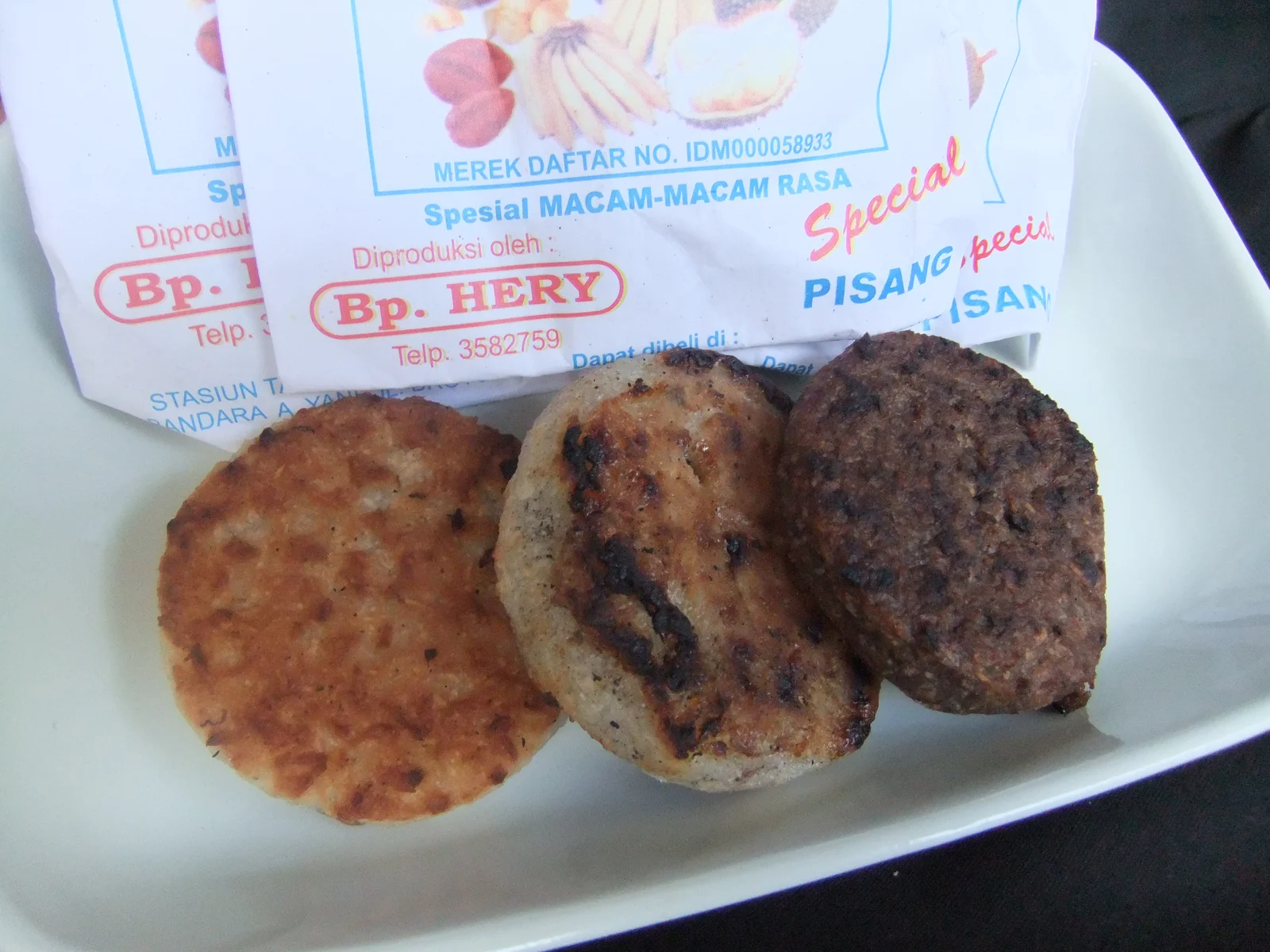
According to the study, in 1958 D. Mulyono began registering the sweet’s trademark. Pictures resembling trains stood out on other shops’ paper as well, and buyers were unsure which to choose. Places to sell souvenirs in the city were also no longer limited to the station, and some people set up small stalls on Jalan Pandanaran between Tugu Muda and Simpang Lima. Even as the place in the city where people picked up the sweets changed, each shop used its own mark on the packaging so that a buyer could tell the shop by picking up a single packet.
Sugito, whom the study interviewed, says that he worked in a workshop as a child in the 1960s and later made the sweets himself and hired people. In Semarang too, furnaces were at first fired with firewood and coconut shells, and by around the 1980s some makers used aluminum molds, ovens, and mixers. Besides selling on trains and at stations, makers also appear at Pasar Semawis in the Chinese quarter and at city food events. The Airlangga University article reports that in Babat, wingko is also displayed in shops and markets that pilgrims pass through. In every place it can be a travel souvenir, but the occasion on which it is taken home differs among the large round chosen for weddings, the paper packets sold door to door, and the products of various shops lined up at markets.
The cultural preservation institution’s materials link the round shape to determination to see things through, and the stickiness of glutinous rice flour to family bonds. Read alongside the record that a Babat workshop chose its large round pieces as wedding gifts, this suggests that, besides the quantities and the way of baking, the form in which the sweet is given and to whom it is given are also part of the local sweet.
Wrapping and Carrying the Softness of a Fresh Bake
Even when grated flesh and glutinous rice flour are baked, some moisture remains, so wingko has been studied as an intermediate-moisture food. An experiment at IPB University placed the baked sweet in aluminum-foil packs, preparing some vacuum-sealed and some not. Heating treatments in water at 65, 75, and 85 °C were compared, and for process efficiency the condition of vacuum-packed product heated at 85 °C for 10 minutes was selected. This value cannot be applied directly to the method of wrapping each piece in paper.
Under the selected conditions, the total viable count measured in week four was 4,600 CFU per gram, mold and yeast were 300 CFU per gram, and free fatty acids were 0.66 percent. All were within the range of the 1996 Indonesian standard that the authors used for comparison. In the sensory evaluation, however, the product had hardened by week two and was not accepted by the evaluators. When a moisture-retaining sweet is carried, a test of the condition of the package and an evaluation of the texture in the mouth do not necessarily indicate the same number of days. When choosing wingko as a souvenir, too, the aroma of the baked surface noticed on opening the package and the springiness of the interior may change from when it was freshly baked.
The rounded edge from being turned and baked one at a time and the shop’s mark that the customer sees on the paper wrapping are added in separate steps. When the paper is unwrapped and the sweet is eaten, the coconut mixed in first at the workshop and the dough’s softness, which may change during transport, can both be felt in a single piece.
Glossary
- Babat
- A town in Lamongan Regency, East Java. Its name is preserved in wingko babat.
- Semarang
- The capital of Central Java Province. A family that moved from Babat sold wingko there, and it became known as a souvenir.
- Loe Lan Ing
- The person who took over the family’s wingko-making business in Babat. The name is used for the workshop.
- Loe Soe Siang
- Said to have made wingko in Babat; the father of Loe Lan Ing.
- Djoa Kiet Nio
- Named in Lamongan Regency’s introduction as someone who began making wingko together with her husband, Loe Soe Siang.
- Loe Lan Hwa
- A person who moved from Babat to Semarang and made and sold wingko there.
- The Ek Tjong
- The husband of Loe Lan Hwa. The paper records that he moved with the family and worked in a railway-related job.
- Cap Kereta Api
- A wingko brand name that originated in Semarang. Its wrapper uses a picture of a train.
- Cap Spoor
- An older name referring to the train mark. Spoor is a Dutch word related to railways.
- Intermediate-moisture food
- A category of foods that retain some moisture. Here, vacuum packaging and storage condition after heating were studied for wingko.
- Pasar Semawis
- A market in Semarang’s Chinese quarter. The study records it as one of the places where wingko is sold.
- Sugito
- A person who, in the Semarang survey, said he had been involved in wingko work since childhood and later became a maker.


