


SweetloreEncyclopedia of World Sweets (834)

Nagasari
Nagasari
Banana pulp wrapped in white batter and leaf
Desserts / Indonesia

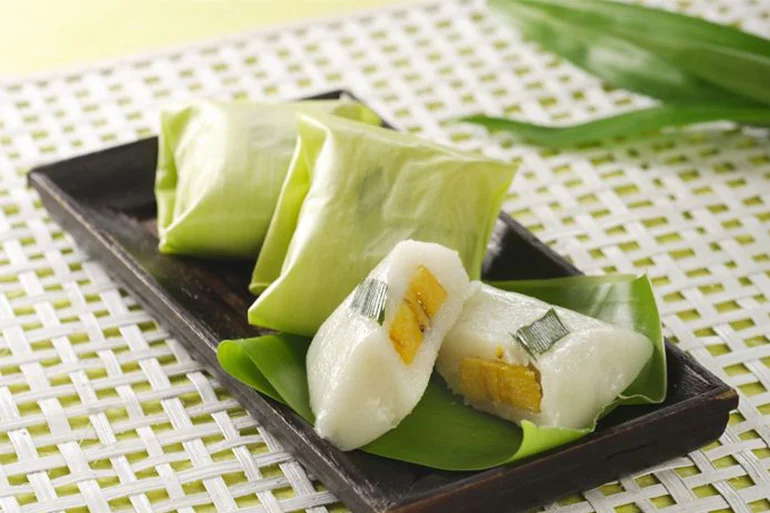
Opening the folded banana leaves reveals a glossy white batter. Bite through the coconut-milk batter and you reach steamed, softened banana. Nagasari is a leaf-wrapped steamed sweet from Java: a rice-flour batter enclosing fruit pulp. The fruit adds sweetness, while the leaf holds the shape during steaming and imparts its fragrance. In Java it can be used for weddings and everyday gifts, and in Lampung some makers wrap mung beans instead of banana and take them to market.
How coconut milk is added to the rice flour
The home-style method in the Language Agency’s Belajar dari Makanan Tradisional Jawa uses 200 g of rice flour, 200 g of sugar and 500 ml of coconut milk. Sugar, salt, powdered vanilla and pandan leaves are added to the milk, which is brought to a boil over medium heat while stirring. Once the fragrance of the leaves has passed into the liquid, the heat is turned off and the hot liquid is poured over rice flour in a separate bowl. The mixed batter can be scooped up by the tablespoon, and it forms the base that holds the fruit on the leaf.
A study held by Universitas Pendidikan Indonesia, which cites a food practicum textbook, describes a method that separates thick and thin coconut milk. 100 g of rice flour is dissolved in 100 ml of thick coconut milk, and 300 ml of thin milk is heated with sugar, salt, pandan and vanilla, then strained. The dissolved rice flour is added, the pot is returned to the heat, and the mixture is removed when it is about half cooked. In this example the sugar is 120 g and the fruit is three pisang raja. Whereas the textbook procedure pours hot liquid directly onto the flour, this one disperses the rice flour in the liquid and then warms it in a pot to adjust the thickness.
In the same Language Agency book, the chapter text describes combining rice flour and sago starch, while the home-style quantity list gives only rice flour. Tastemade’s 2019 example adds 150 g of cornstarch to 200 g of rice flour and uses 250 ml of thick coconut milk and 150 ml of water. The flour and liquid are mixed in a pot to make a batter that can be spooned onto the leaf. In every case it is difficult to tell the flour from the finished white batter, and the differences in method show in the ingredient list and in how the batter is heated before wrapping.
In Tastemade’s quantities, the sugar is 50 g and the bananas are three. Although every version adds sugar to the batter, the amount equals the weight of the rice flour in the Language Agency’s textbook, exceeds the rice flour in the Universitas Pendidikan Indonesia material, and is smaller relative to the total flour in the cornstarch-and-rice-flour example. Sweetness is not determined by the sugar alone, since the sweetness of the fruit is also tasted. Because the flours and liquids are not standardized across these versions, the comparison shows only the combinations of ingredients that produce the sweetness and the white layer.
Where the fruit sits, and how the leaf is folded
The Language Agency’s book names pisang raja as a commonly used fruit, while the quantities it gives call for pisang kepok. A folk-culture source from southern West Java mentions raja and pisang nangka. Whichever variety is used, it is peeled and cut to fit within a single leaf-wrapped portion. Examples include round slices and diagonal slices, and depending on where the package is cut when eaten, the fruit may be visible inside the white batter.
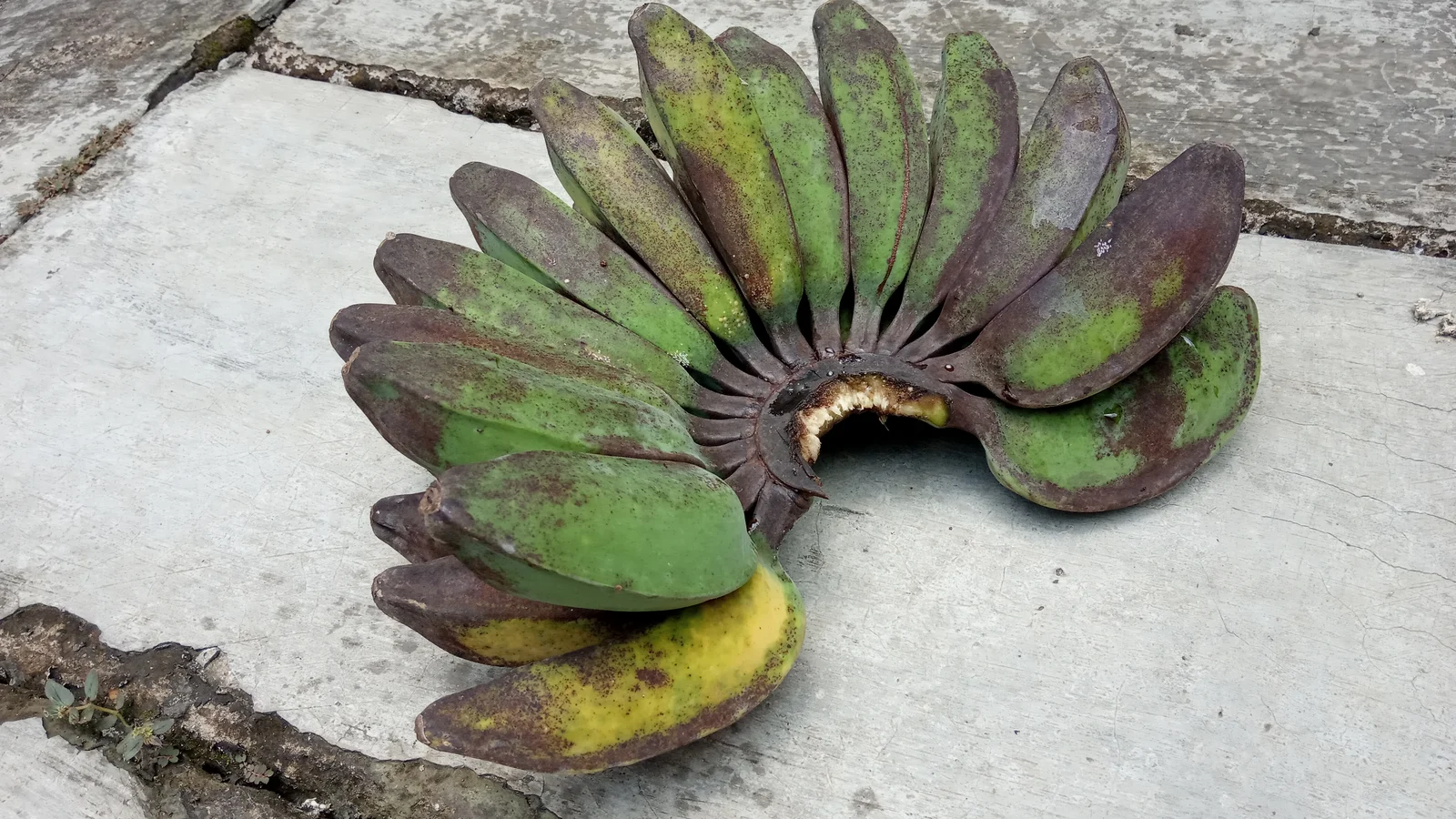
The batter is spooned onto the leaf, the fruit is placed in the middle, and the edges of the leaf are folded in. In the example from the Universitas Pendidikan Indonesia material, more batter is added over the fruit. Inside the package, no side of the fruit touches the leaf, and breaking it open lets you bite through the layer of flour and the banana in one mouthful. The southern West Java source gathers the batter into small squares before wrapping them in leaf, and its ingredient list includes salt and pandan but not sugar. Irlina of Lampung explains that leaves are easier to fold if they are first dried in the sun until limp. A pliable leaf folds along the batter and filling, so each piece keeps its shape even when lined up in the steamer.
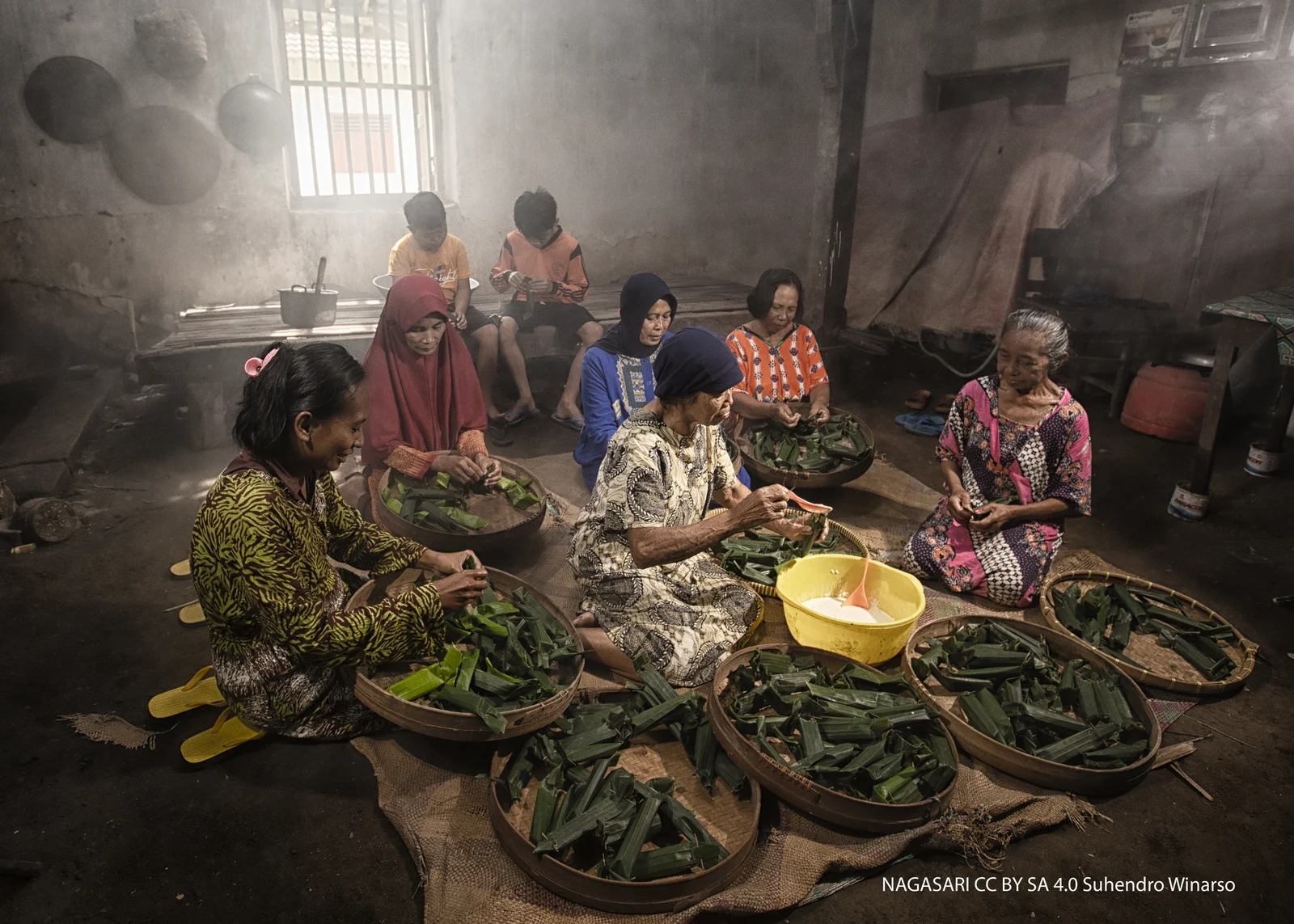
In the Language Agency’s textbook, the banana is first cut into small pieces, one piece is placed on each tablespoon of batter, and the same sequence is repeated until the batter is used up. In the southern West Java method, the fruit is added at the stage where the batter is shaped into small squares. In both, the leaf supports the shape of each package, but the cook handles different things just before wrapping: batter spooned onto the leaf and then topped with filling in one case, small squares formed beforehand in the other.
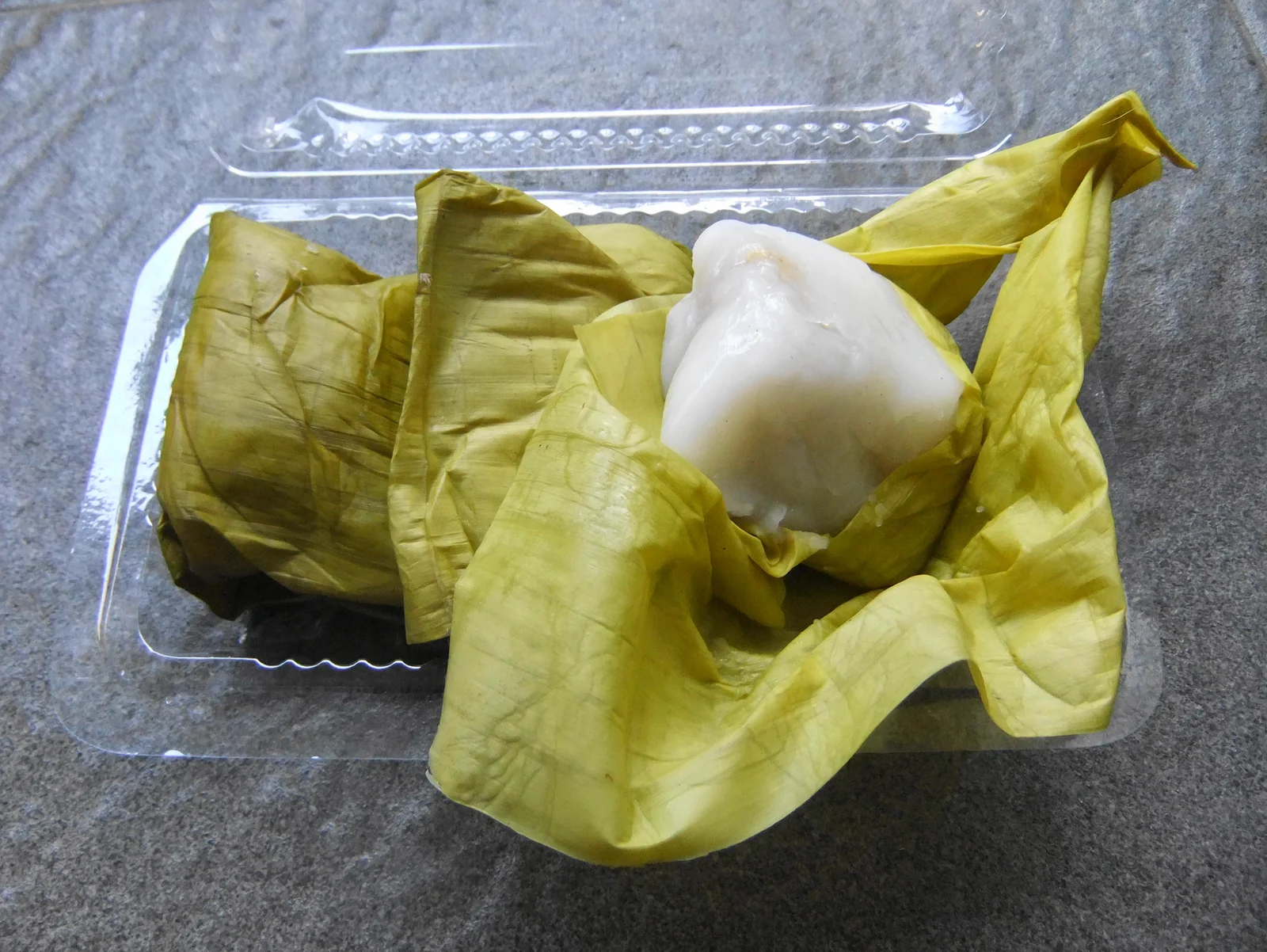
In the Universitas Pendidikan Indonesia example the packages are steamed over high heat for about 20 minutes, while the Language Agency’s textbook gives no time and says to remove them once cooked through and let them cool. Inside the leaf, both the coconut-milk batter and the fruit soften all the way through. As the RRI article reports, the fragrance transfers while the wrapped package cooks. When held, the leaf supports the batter, and to eat it you unfold the folded ends and take out the batter. When you turn back the corners, the leaf still shows where it was folded in.
The name in dictionaries, and leaf-wrapped sweets in cookbooks
Poerwadarminta’s 1939 Javanese dictionary Bausastra Jawa gives the meanings of nagasari as a tree, a food made from banana, and a batik pattern. In the passage of the Serat Centhini where the same spelling appears, nagasari is listed among fragrant flowers. Which meaning is intended is clear from the context. The appearance of the same spelling in an old work does not, by itself, let us trace since when the recipe of today’s sweet has been the same.
Timbul Haryono’s 1998 paper, which classifies the foods in the same work, lists nagasari among the names of sweets and snacks. Agus Efendi’s study reviews earlier research on the offerings for ruwatan, the rite to ward off misfortune and bad luck, and lists nagasari together with the rice dishes and sweets that appear in the work. The offerings Efendi compiles also include kupat, which is rice pressed into shape, and menduit. A nagasari listed as food in a table of offerings and the same word written among flowers can be told apart by what it is listed with. The mixture and hand movements before steaming can be read from cooking sources that give quantities and steps separately.
The reprinted edition of Mustikarasa, a cookbook first published in 1967 by Indonesia’s Ministry of Agriculture, calls for 250 g of rice flour, six pisang raja, four cups of coconut milk, half a cup of sugar, salt and pandan. Half of the milk is mixed with the rice flour, the other half is boiled with sugar, salt and pandan, and the two are combined and heated again. The cooked batter is taken onto a leaf, cut banana is wrapped in it, and the package is steamed further. In the southern West Java record, coconut milk boiled with pandan is poured over the rice flour and gathered into small squares. The cookbook’s recipe goes as far as dividing the liquid in two and reheating the mixed batter in a pot.
In the same cookbook, the kue pisang of Purwokerto makes its batter with mung bean starch flour. It uses the same pisang raja as rice-flour nagasari, but the fruit is boiled separately and cut into rounds. Batter is taken onto a leaf, the fruit is placed on top, another spoonful is added, and the package is wrapped into a rectangle and left to cool. Nagasari, which is steamed after wrapping, and kue pisang, in which boiled fruit is wrapped and cooled, look alike from the outside of the leaf. The flour used for the white layer and the order in which the fruit is cooked are the clues that distinguish the two recipes.
Packages given to neighbors and both families, and packages taken to market
The Language Agency’s book explains that in Java nagasari is also used for antaran, gifts delivered to neighbors and relatives, and for seserahan, gifts presented at weddings. In particular, the stickiness of the batter carries wishes that bonds between friends and family will grow stronger, that the couple marrying will live together harmoniously, and that the relationship between the two families will last. Because each piece is wrapped individually, several can be arranged together for delivery, and each recipient opens them on the spot. Beyond flavor, what the sweet is meant to wish for changes with where it is delivered.
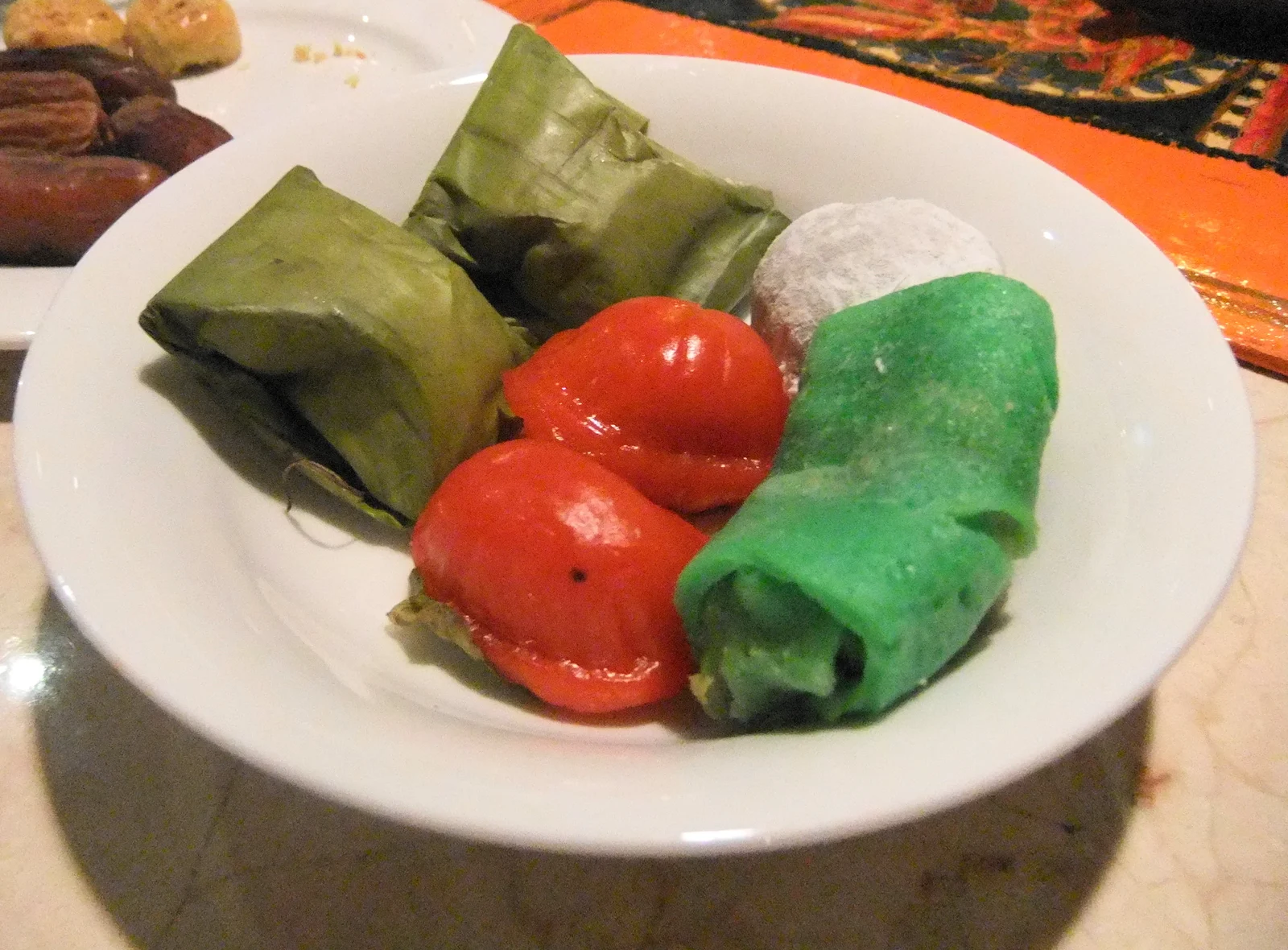
The stickiness mentioned here is the feel of the white batter holding together as one mass when the leaf is opened. The people the same sweet is meant for change with the occasion: friendship and kinship ties when it is taken to neighbors, the relationship between the couple and the two families when it is given at a wedding. The family gatherings and market snacks that RRI describes share this leaf-wrapped form, which can be opened one portion at a time.
In a 2021 report from Lampung, Irlina, who sells sweets in Tanjung Karang, Bandar Lampung, said she makes the batter from rice flour, sugar, thick coconut milk, pandan and salt, and mixes in starch flour after it thickens in the pot. For the filling she uses mung beans soaked in water so the skins come off; she flattens the batter on a leaf, places the beans on it, wraps it into a square and steams it for about 30 minutes. Although some sellers use clear bags, she kept using banana leaves for the sake of the fragrance. She received orders for gatherings of relatives and the like, and Hasana at the Gedong Lelang market also took orders for sets that combined the mung bean version with other sweets. In nagasari that wraps a piece of fruit, sweet banana appears after the first bite, whereas with beans the texture and flavor of small grains are added to the batter.
Irlina explained that the bean filling also uses sugar, coconut milk and pandan. In some sweets a single fruit is the center as it is, but the mung beans require soaking beforehand and seasoning of the filling. Although she sold them individually at the time of the interview, for gatherings of relatives and regular customers she could take orders for assorted sets. That a sweet bought daily at the market can become an item for an occasion is close to Javanese gift-giving, and what goes inside is left to the maker’s choice.
Nagasari in a land where flour comes from breadfruit
The cookbook of the Food Agency of Kotawaringin Barat Regency in Central Kalimantan includes nagasari sukun, which uses flour made from breadfruit. The fruit is peeled, cut into small pieces, steamed for about 15 minutes and dried in the sun. It is then crushed and sieved to obtain the flour. The nagasari entry combines the breadfruit flour with 1,600 ml of coconut milk, sugar, vanilla and pandan, and heats it over low heat until it no longer sticks to the pot. Unlike flour prepared by grinding rice, it starts from steaming and drying the fruit.
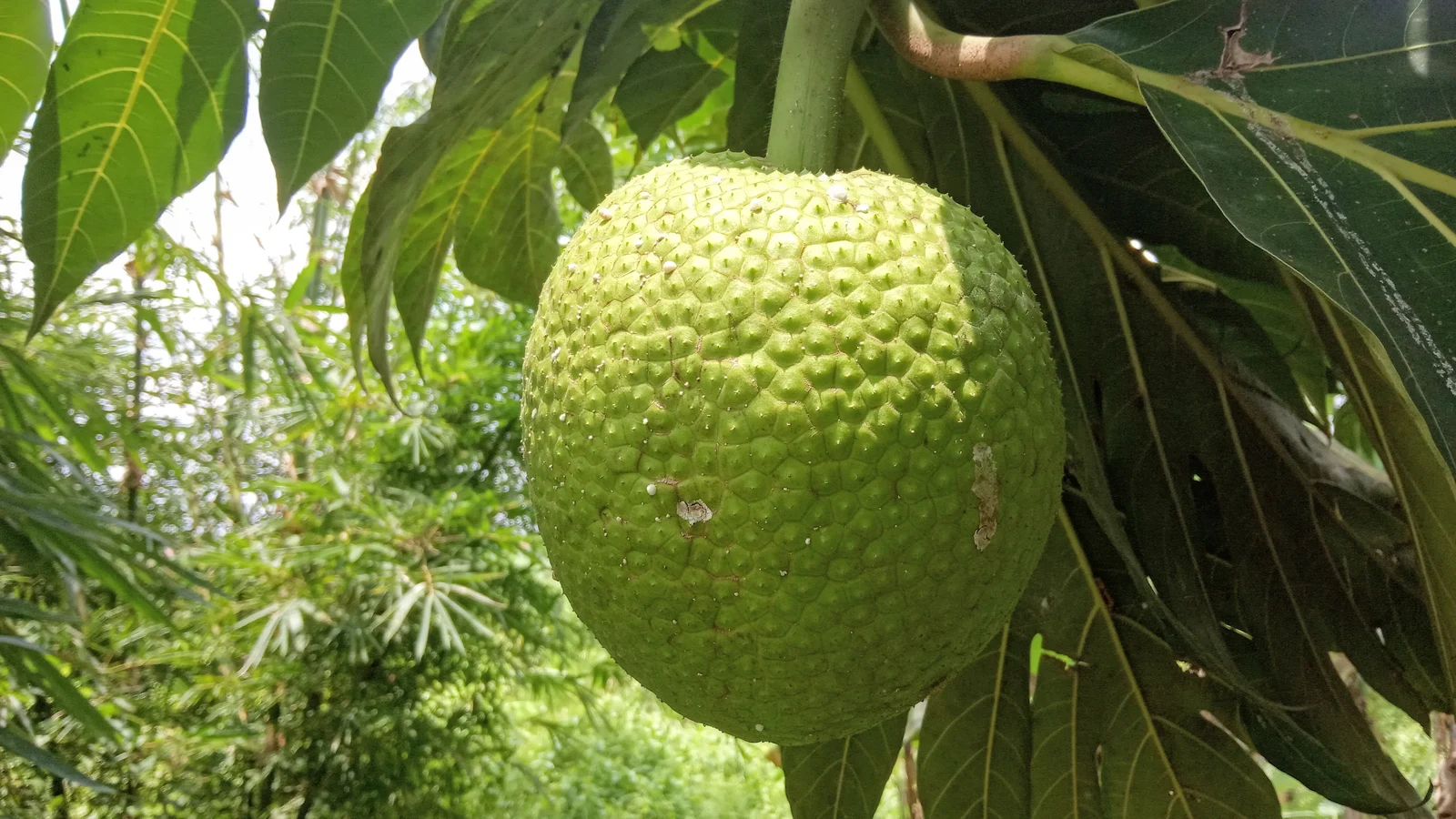
The Kotawaringin Barat book mentions steaming times in two places. The roughly 15 minutes when turning the breadfruit into flour comes before drying, and the roughly 15 minutes after gathering the batter in leaves is for finishing the sweet. The first steaming is part of making the fruit easier to turn into flour, while the second heats the sweet’s batter, which has been combined with coconut milk and sugar. Small pieces of fruit and a sweet wrapped by folding a single leaf are also handled differently once they come out of the steamer.
The cookbook has the warm batter spooned onto a leaf, folded into a package and steamed for about 15 minutes. The ingredient list also includes pisang raja, but it does not state how it is cut or when it is added. Even in this version with a different flour, the kneaded batter is gathered into a single leaf. Open one of the white sweets lined up at a market or a wedding, and what comes through first is not which flour was used but the steamed, softened batter and the fragrance of the leaf. Breaking it open to the center shows the difference between fruit and mung beans.
Glossary
- Pandan
- A leaf heated with coconut milk and other ingredients to add fragrance to dishes and sweets.
- Pisang raja
- A type of banana used in sweets such as nagasari.
- Pisang kepok
- A banana used in cooked preparations such as steaming, and also used as the filling for nagasari.
- Pisang nangka
- A banana that a southern West Java source lists as a fruit used for nagasari.
- Ruwatan
- A Javanese ritual performed to ward off misfortune and bad luck.
- Kue pisang
- A name for banana sweets; here it refers to the leaf-wrapped recipe from Purwokerto.
- Antaran
- Items delivered to neighbors, relatives and others.
- Seserahan
- Items presented at a wedding.
- Nagasari sukun
- Nagasari made with flour from breadfruit.


