


SweetloreEncyclopedia of World Sweets (834)

Alle Belle
Alle belle Goa
Coconut and sugar filling rolled in a thin cooked pancake
Baked Sweets / India, Goa

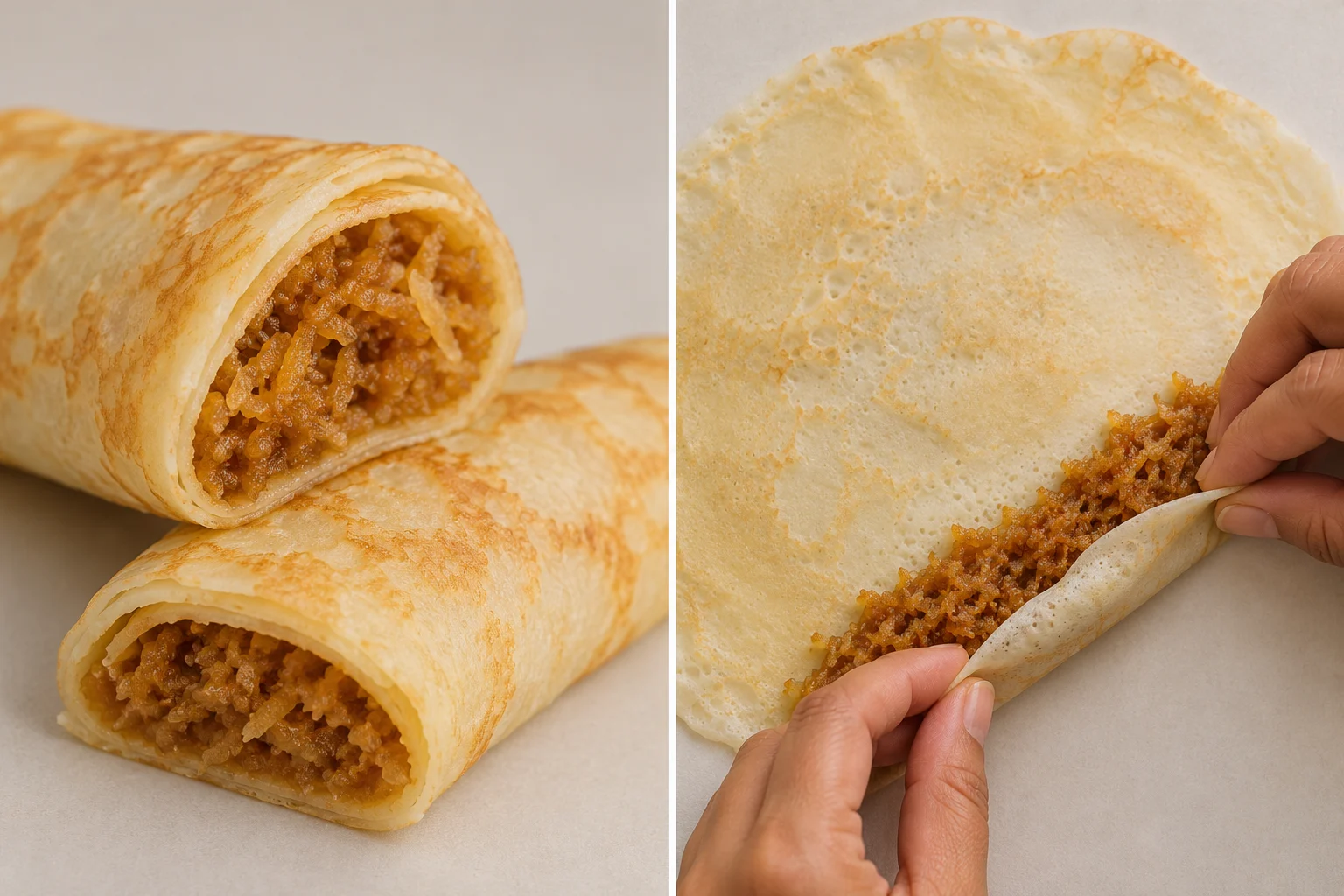
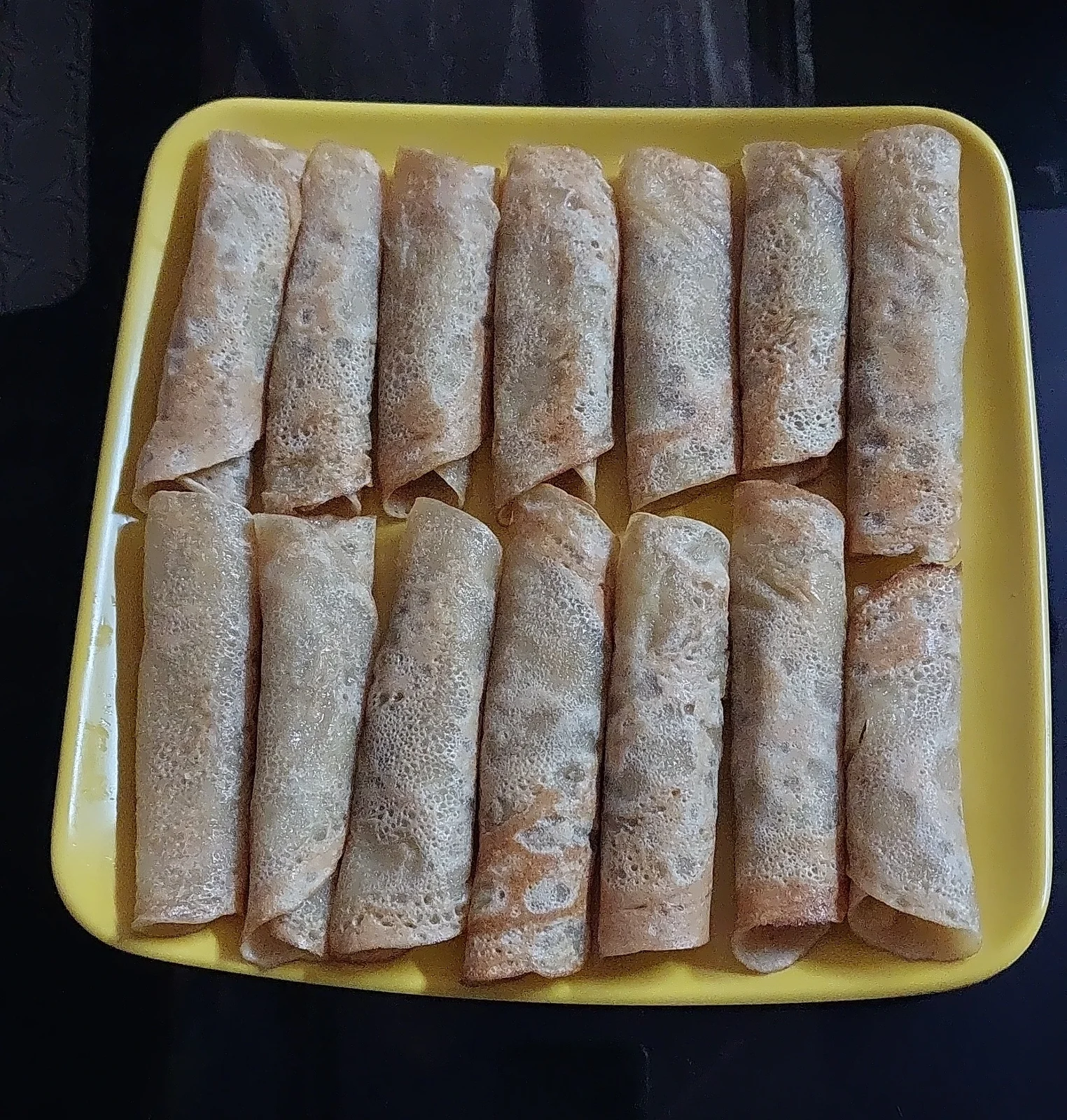
Alle Belle is a Goan sweet in which freshly grated coconut is laid in a strip on a thinly cooked pancake, and the edges are folded in before the pancake is rolled up. Popular on India’s west coast in Goa, it is made from a batter of wheat flour, egg and other ingredients, wrapped around a sweet filling of coconut and jaggery. When cut, the thin spiral of the pancake is edged by grains of coconut tinted with the color of the sugar. A bite gives a soft pancake first, then the grains of coconut flesh loosen. It is known as a tea-time sweet, and some people have made it with their families on the Tuesday before Lent begins.
Judging Doneness at the Edge of the Thin Pancake
In the Goan household that Sharon Fernandes describes, flour, salt, beaten egg and water are mixed until smooth. The batter rests for 15 minutes, then is spread thinly in a pan warmed with a little ghee and covered with a lid. The pancake is cooked without flipping, then taken out and cooled before use. If a cooked pancake is thick, the rolled part becomes several layers thick. With thin pancakes, the center that holds the filling can be wrapped, and the overlapping edges can also be folded small. The job at the start of cooking is not to compete over browning but to spread the batter to a thinness that suits holding the filling.
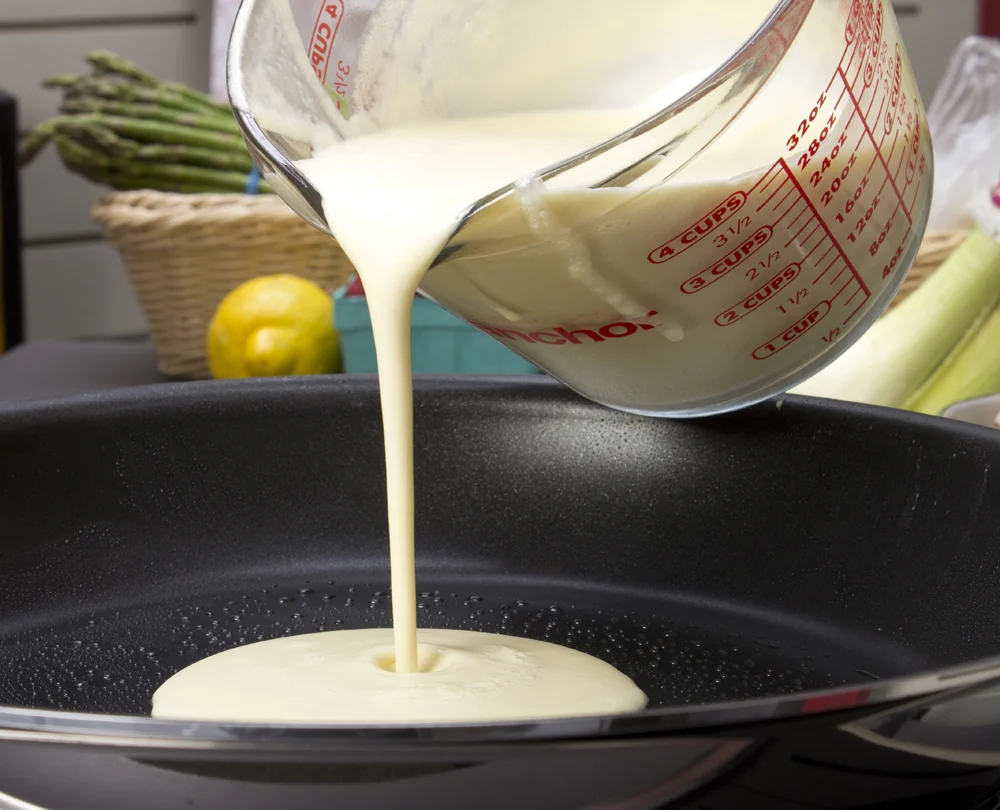
Nik Sharma has inherited his mother’s and grandmother’s alle belle. The batter, made with milk, rests for at least 2 hours, and is spread in a lightly oiled pan and cooked for about 1 minute. When the edges begin to lift from the pan, the pancake is flipped and the other side is cooked for about 30 seconds. Fernandes covers the pan and cooks one side only, while Sharma watches for the lifted edge and flips. The methods differ, but in both cases the pancake that is lifted out is left in a state that can change shape later as it receives the filling.
In Crescy Baptista’s version, milk and water are added to a batter of flour and egg, with a little vanilla. About 50 to 60 milliliters goes into a 22-centimeter frying pan at a time, and the pan is swirled to spread the batter thinly. It is lifted out when the edges turn golden over low heat. Edridge Vaz, a hotel chef, also swirls the pan to spread the batter thinly, but in his version the batter is strained before use, and once it has set, a wooden toothpick is slipped under it to flip it. Edges coloring, lifting from the pan, the batter setting: the cues that makers watch for differ from recipe to recipe, as do the resting time and the number of sides cooked.
In Jessie’s home recipe too, a pan of about 15 centimeters is tilted to spread the batter thinly, and the pancake is cooked covered over low heat for 1 minute. The batter is made by mixing flour, egg and milk with melted butter, baking powder and vanilla, and it is strained before cooking. The pan is lightly greased for each pancake. In the basic recipe in the Gomantak Times, sugar is added to the egg, the batter of milk, water and flour rests for 15 to 25 minutes, and 1½ tablespoons are cooked at a time. Both are covered-pan versions, but the batter formulas and the amount poured each time differ, in order to make one pancake that fills the pan.
Alex Rexon Dias, a Goan chef, also describes a way to wrap coconut and jaggery in a soft thin pancake, and mentions the option of using gluten-free flour. In his published version, 75 grams of refined wheat flour and 50 grams of rice flour are combined with 2 eggs and milk to make a smoothly flowing batter. Reading the ingredients from the versions made with wheat flour, the pancake contains egg, and some versions include milk. Ghee is a dairy fat made from butter by removing the water and other components, so even the small amount brushed on the pan contains a dairy ingredient. Even when the filling is only coconut and jaggery, anyone telling diners what is in the dish should check the fat used to cook the pancakes as well.
The Sugar Mixed into the Coconut, and the Moisture of the Filling
Jaggery is a sweetener made by boiling down sugarcane juice or palm sap. The madachem god that Baptista uses in Goa is a dark jaggery made from coconut palm sap, shaped like a small pyramid. One piece is powdered and tossed with the grated coconut, together with a little sugarcane jaggery and cardamom. In her formula, about 100 grams of the coconut palm jaggery and about 30 grams of the sugarcane jaggery are mixed so that no lumps of sugar remain. The white coconut flesh takes on the color of the sugar, and the original dark lumps spread among the small grains of the wrapped filling.
In the version of the cooks Fernandes describes, grated or crushed coconut palm jaggery is mixed by hand into freshly grated coconut. The amount of sugar is adjusted to taste, and cardamom is an aroma added as desired. Baptista likewise describes mixing grated coconut with powdered sugar. In these two versions there is no step of cooking down the filling; the sugar is thinned into small grains and worked through the coconut. The grated coconut keeps its original fine fibers, which make a difference in texture when layered with the thin pancake.
Jessie of Celebration In My Kitchen dissolves palm jaggery in water, strains it through a cloth, and puts it in a pan with the coconut. She cooks off the moisture while stirring, scents the mixture with cardamom, and sets aside the portion to be rolled once it has cooled. Sharma fries ginger and cardamom in oil to release their aroma, adds the coconut and then the jaggery, and stirs for about 5 to 6 minutes to drive off excess moisture. The filling is moved to a bowl and shaped into small sticks, one for each roll. Whether a sugar syrup is used or the spices are heated first, in the versions that cook the filling, the moisture is reduced in the pan before the filling is moved onto the pancake.
In the version published in the Gomantak Times, grated coconut and coconut palm jaggery are put into a pan together, heated for about 10 to 30 seconds, and left to cool. Sharma’s version, which takes 5 to 6 minutes, is stirred until the excess moisture has gone, and Jessie’s version uses sugar dissolved in water, so it begins with a step of straining the syrup. Even within the single phrase "cook the filling," there is time for dissolving the sugar and time for driving off the filling’s moisture.
In Vaz’s hotel version, dark jaggery heated with water is combined with freshly grated coconut, cashew nuts and raisins, and cooked for 3 to 4 minutes, then left to cool. With the nuts and raisins added, larger pieces that you meet with each bite mix in among the fine coconut flesh. From versions that mix raw coconut and sugar by hand to those that boil down a sugar syrup and add the nuts, coconut and jaggery are the starting point. The feel the filling is given before it is placed on the pancake changes how its grains are perceived within a single roll.
Filling in the Center, or Rolling from the Edge
In the versions by Fernandes and Sharma, the filling is laid in a strip across the center of the cooled pancake, the edges are folded inward, and then the pancake is rolled. With both sides folded, the pancake holds the filling at the two ends of the finished cylinder. Baptista puts a tablespoon of filling at one end of the pancake, rolls it twice, folds in both sides, and rolls it up to the end. Where the filling is placed changes the first turn of the roll, but the common action is to roll a little at a time and push filling that threatens to spill sideways back inside the pancake.
Jessie describes a method of placing the filling on one side, rolling, and folding in only one end. From the open end, grains of coconut inside the pancake can be seen. The same page also has versions in which the batter is divided and tinted with food coloring, or the pancakes are dotted with patterns, and it shows a method of folding the colored pancakes in at both ends like spring rolls. Vaz cuts the finished roll in half and serves it warm. Being able to see the spiral of the pancake and the coconut filling at the same time in the cut face comes from this finishing step.
Tea Time and the Tuesday Before Lent
The Gomantak Times of Goa presents alle belle under the names Alle Belle, Ale Bele and Mannkio, and treats it as a tea-time sweet. Jessie remembers it as something her mother cooked at tea time for the children. Fernandes’s article also recommends eating it with tea. Fernandes also writes of sweets made with coconut palm jaggery appearing at tea in the village around the time the bell calling people to evening prayers rings out. Jessie pairs hers with hot unsweetened tea. Some versions cook the pancakes and serve them hot at the table right away, while other methods cool the pancakes and the filling separately until they are rolled. The sweetness of a mouthful and the warmth of the tea served with it remain in the makers’ accounts. The coconut is grated, the sweetener is mixed in, and the filling is portioned onto the cooked pancakes and rolled. The sweetness and the amount of cardamom can be adjusted in the kitchen to the family’s taste.
In Sharma’s family, his mother and grandmother made alle belle every year on the Tuesday before Lent. The first day of Lent is Ash Wednesday, and the day before it is Pancake Tuesday (Shrove Tuesday). Lent is the period observed in preparation for Easter, and a GOYA feature explains the custom of making pancakes on the day before to use up cream, butter, eggs and other rich ingredients. Baptista speaks of the tea custom called merenda in Goan homes, and names alle belle as one of several sweets. Her suggestion that sweets made with rich ingredients may have been eaten before the start of abstinence is also presented as her own conjecture.
GOYA raises the possibility that pre-Lenten pancakes began in the colonial period. I have found no source that gives the date when alle belle originated, who devised it, or the etymology of the name "alle belle." The Gomantak Times reports that the custom of celebrating Pancake Tuesday in Goa is not widespread. Sharma’s family story, in which it was made on this day every year, and Jessie’s memory of eating it with everyday tea show the same sweet being made on different days in different households.
A Goan Sweet That Wraps the Same Chunn
The filling of coconut and jaggery is called chunn in Goa. It is also the filling of patoleo, but there a rice batter is spread on a turmeric leaf, the filling is placed on it, and the leaf is folded over and steamed. Before eating, you open the outer leaf and the rice batter appears. In alle belle, the thin cooked pancake of wheat flour and other ingredients is eaten together with the coconut filling. Another Goan sweet, bol, is a round cake baked from flour, coconut and jaggery combined with palm toddy. The pairing of coconut and sugar can be seen in three forms: steamed, baked, and wrapped in a cooked pancake.
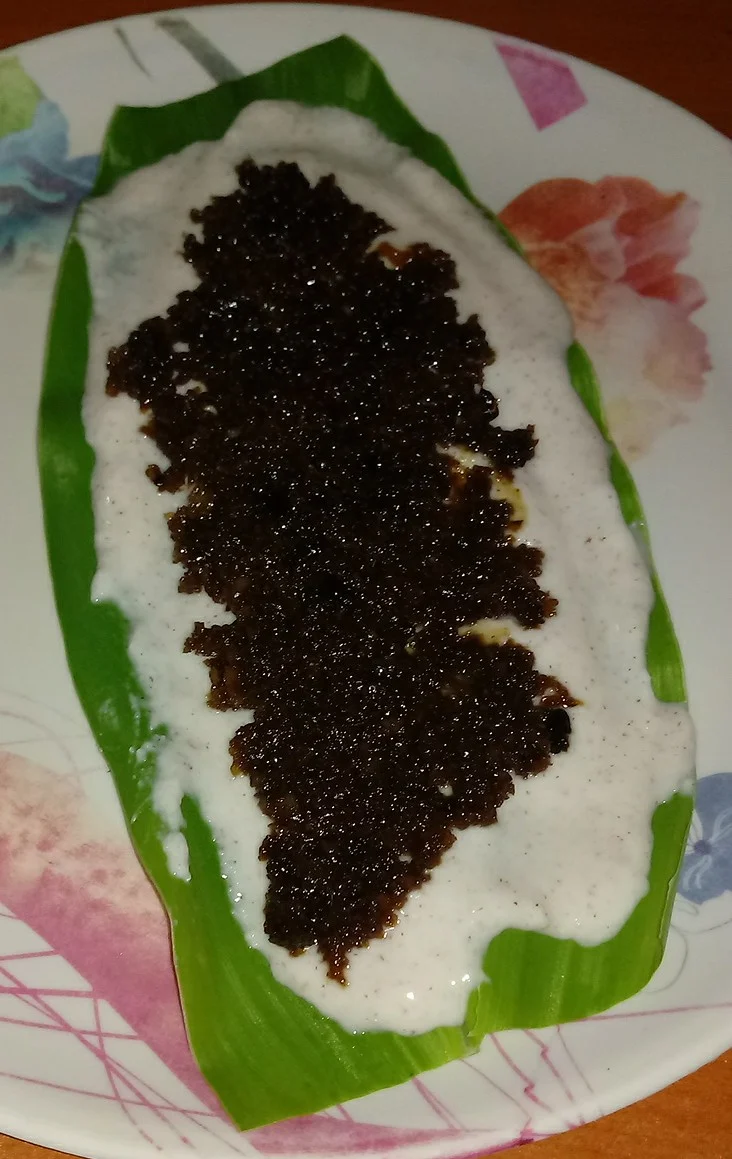
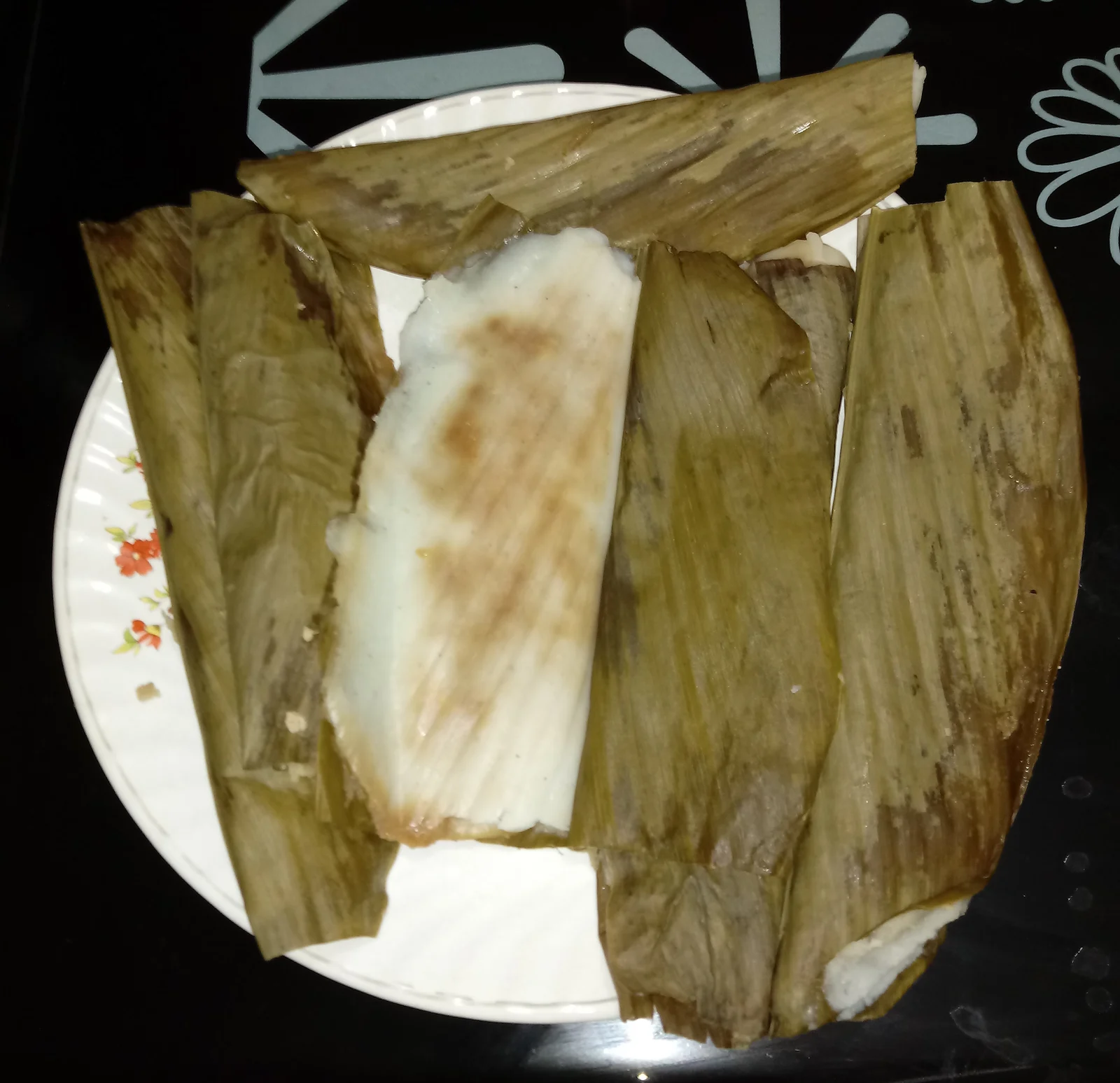
On the rolled thin pancake, the Gomantak Times explains that it is closer to a crêpe than to a thick pancake. The Goa Tourism Development Corporation also presents it under the name Alle Belle, as a sweet in which a crêpe-like thin pancake is filled with sweetened coconut. The Kerala mutta parada that Dias mentions likewise resembles it in being a thin pancake with sweet coconut. The Bengali patishapta in the photograph is also a sweet made by rolling a sweet filling in a thinly cooked pancake. Even so, among similar forms, the description of the patishapta photograph lists a rice batter and a filling of coconut and jaggery or reduced milk. Form alone cannot determine a name or the route by which a sweet traveled, and the combination of the pancake’s flour and the filling serves as a clue when comparing them side by side.
Glossary
- Jaggery
- A sweetener made by boiling down sugarcane juice or palm sap. Some Goan versions use jaggery made from coconut palm sap, sometimes together with sugarcane jaggery.
- Ghee
- A fat made by heating butter to remove the water and other components. In Fernandes’s recipe, 1 teaspoon is used in the pan for cooking the pancakes.
- Lent
- In Christianity, the period observed in preparation for Easter. In Goa, some accounts link the Tuesday before it with alle belle.
- Cardamom
- An aromatic spice. Some versions add it to the filling to taste.


