


SweetloreEncyclopedia of World Sweets (834)

Garash Torta (Торта „Гараш“)
Garash cake
A cake from a Danube town, layering thin walnut sheets with chocolate
Cakes / Bulgaria

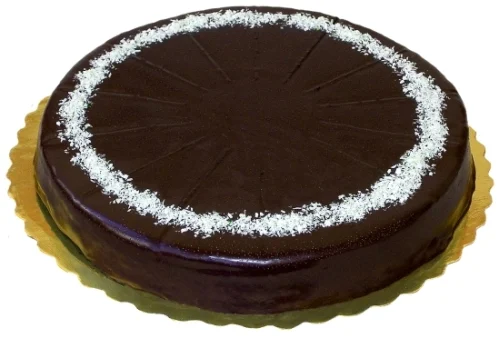
Cut into the chocolate-covered round cake and thin walnut layers appear alongside the chocolate cream as fine stripes. Garash torta is a Bulgarian confection made from nut-based batter baked into discs, joined with cream, and covered in chocolate on the top and sides. Each bite alternates between toasty nut crumbs and chocolate that melts on the tongue. Some versions decorate the border of the top with a thin ring of green-dyed almonds, coconut or chopped pistachios. In Ruse, on the Danube, stories tell of Kosta Garash, the confectioner whose name the cake carries, and of a dinner at a hotel in the late 19th century.
Baking the Walnut Discs One at a Time
In the recipe Pecha Argirova has made repeatedly at home, 350 g of walnuts and 100 g of powdered sugar are baked into discs about 3–4 mm thick in a 26 cm pan. The sugar goes in once the egg whites have turned white and slightly thickened. She stops whisking early, because she believes that beating to stiff peaks can leave the thin, airy discs liable to crack when moved. She also divides the batter into equal portions and spreads it evenly to the edge so that each baked sheet can be carried in one piece. Argirova notes that the discs tend to chip from the thinly spread edges and from darker-baked spots.
For a disc of this size, Argirova bakes at 170 °C for about 15 minutes. Another recipe, published in a Ruse local newspaper, bakes at 150 °C until lightly colored. Older versions are made from egg whites, sugar and ground nuts, while Argirova’s current version optionally adds a little wheat flour or cornstarch. The flour is used not to make a thick sponge but to help the thin sheets resist breaking when they are moved. Even among thin walnut discs, whether flour is included depends on the recipe.
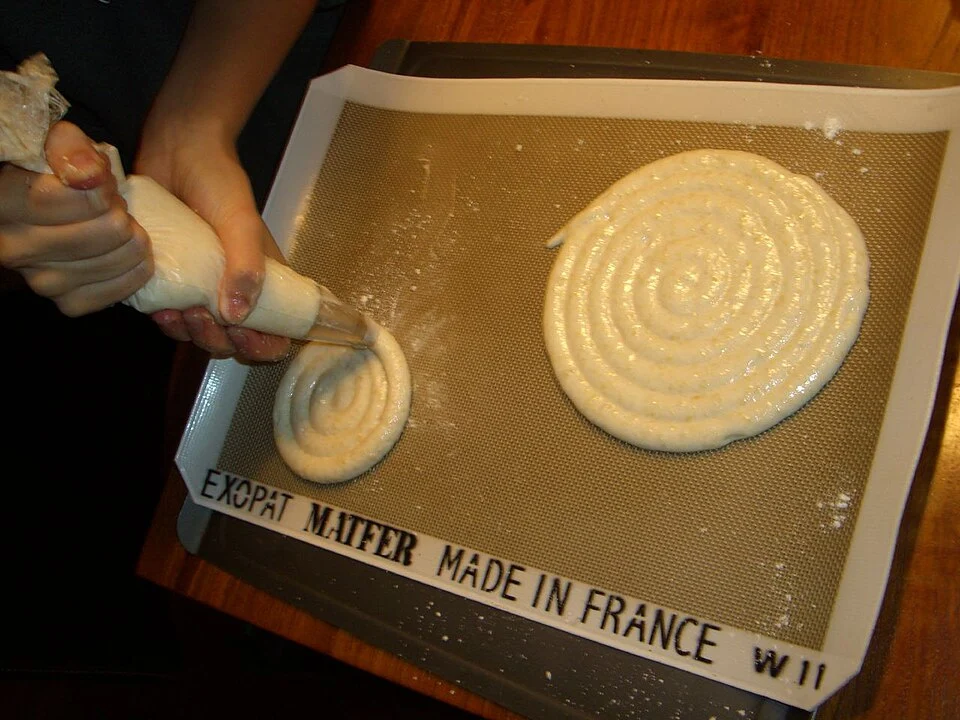
To bake five discs, weigh out about 800 g of batter in total, 160 g per disc. Line the bottom of the pan with baking paper and spread the batter thinly with a spatula so that there are no gaps. After baking one disc, let it cool for about 5 minutes, loosen it from the edge of the pan with a knife, turn it out onto a board and peel off the paper. Wash the pan, prepare the next disc, and repeat the same steps five times. Baking alone takes about 75 minutes in total. Because each disc must be supported and lifted off its paper one at a time, even before the baked discs are stacked, it is important not to make the edges too thin.
Argirova whips cream and folds in couverture that has been melted and then cooled to about 35 °C. If the chocolate is hot, it affects how the mixture combines. If it is so cold that it begins to set, it is hard to spread evenly over a disc. She lets the temperature drop before mixing and gives each layer the same amount. In this version the cream uses 400 mL of whipping cream, 100 g of sugar and 450 g of dark chocolate couverture, with about 160 g of cream per layer and some left over to finish the sides. Surrounding the first disc with a cake ring lets the next discs be stacked at the same diameter. The cake she weighed and measured was just under 4 cm tall before the glaze. There is also another recipe in which sugar, cream and chocolate are warmed over low heat and then stirred while cooling. Even when the same cream is spread layer by layer, the point at which air is incorporated and the moment it becomes spreadable vary with the recipe.
The stacked cake is chilled to settle, and melted chocolate with added fat is poured over the outside. Argirova chills the cream for about 1 hour and melts 150 g of dark chocolate for the coating with 2 tablespoons of oil. To cover the whole cake without leaving spatula marks, she tilts the board and lets the glaze flow over it. She also tried another glaze that included cream, but it stayed soft even after chilling and differed from the mouthfeel she remembered. Once the outside has set, the fork first meets a thin resistance, then passes into the cream and the walnut layers. The Ruse local newspaper’s recipe chills the cake until the next day, so even after the discs are baked, there is still the step of waiting for the cake to become firm enough to cut into slices.
A Printed Recipe and Recipes Kept in Home Kitchens
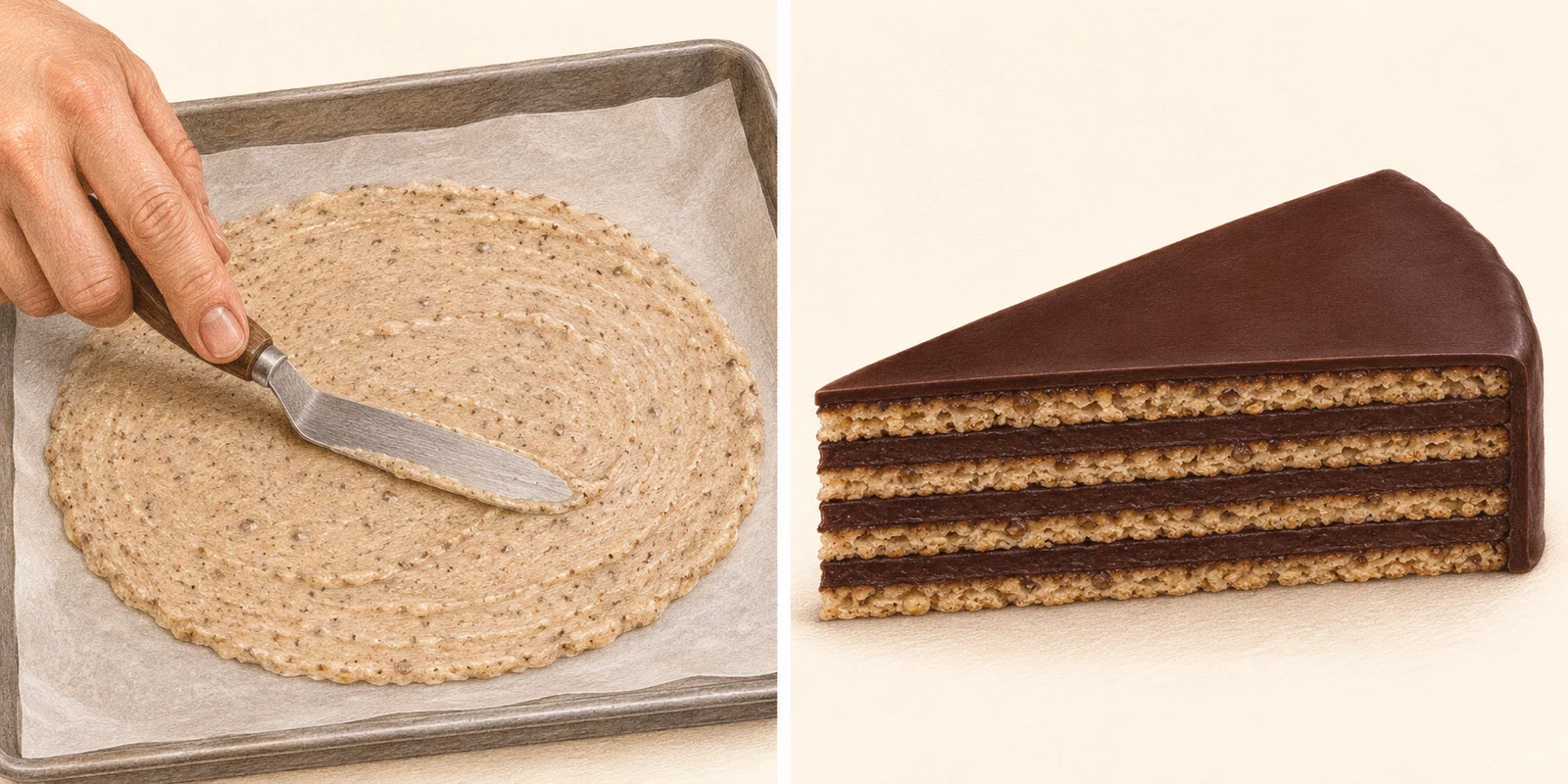
The proportions of walnuts to sugar differ by period and by maker. For the pastry handbook by Polyxena Semerdzhieva and Hristo Semerdzhiev, the Ruse local newspaper Utro cites an edition published in Gorna Oryahovitsa in 1935. In a page photograph presented as the authors’ 1936 edition, item 25, garash torta, combines 250 g of ground walnuts, 350 g of powdered sugar and 8 egg whites. The somewhat loose batter is divided into 5–6 portions, and for baking the thin sheets the text refers readers to Dobosh torta. Hazelnuts may be used instead of walnuts. Argirova’s modern proportions reduce the sugar and raise the share of nuts, which changes the sweetness of the discs when eaten on their own and how present the nut crumbs are.
In the old recipe, the baked discs are removed from the pan immediately, because they break if handled once cooled. Chocolate cream is spread about 5 mm thick between the discs, the cake is shaped into a round, covered with chocolate glaze and decorated with the leftover cream and green almonds. On another page of the same pastry book there is also a "garash cream" made by heating milk cream, sugar and couverture. The cake’s page specifies chocolate cream, not the use of the similarly named cream on the other page. The sweetness of a slice is not determined solely by the ratio of walnuts to powdered sugar; the cream between the layers and the coating on the surface also contribute.
Two recipes handwritten at home in the early 1980s were donated to the Ruse museum in 2023 by Tanya Maleva, an ethnographer from Smolyan. One calls for baking 4–5 separate layers and using 7–8 bars of chocolate. The other bakes everything at once as a single sponge-like cake and uses cocoa in place of chocolate. Maleva says it was a time when ingredients were often scarce and gathering them was hard. Even the time spent stacking the discs and the number of chocolate bars to find differed on the papers handed down in homes. The two handwritten sheets carried marks beyond the recipes. Maleva explains that power cuts at the time meant lighting lamps, and that fuel for the lamp had been spilled on the paper. The note of 72 stotinki for one chocolate bar and the smell that lingered until the papers reached the museum also show the circumstances of an era when people bought ingredients for home baking and kept recipes at hand by lamplight.
A Hotel on the Danube and a Café in Sofia
Kosta, remembered locally by the name Garash, is said to have come to Bulgaria from the territory of Austria-Hungary. A municipal council record of 1885, to which Utro refers, states that the hotel Islyah Khane was leased to Kosta and to Tereza Garash, the wife of his brother. In an interview with a historian for Bulgarian National Television, too, the earliest record linking the hotel and Garash is given as 1885. What this document shows is when he began to be involved with the hotel; for the menu and recipe of the cake, other sources must be consulted.
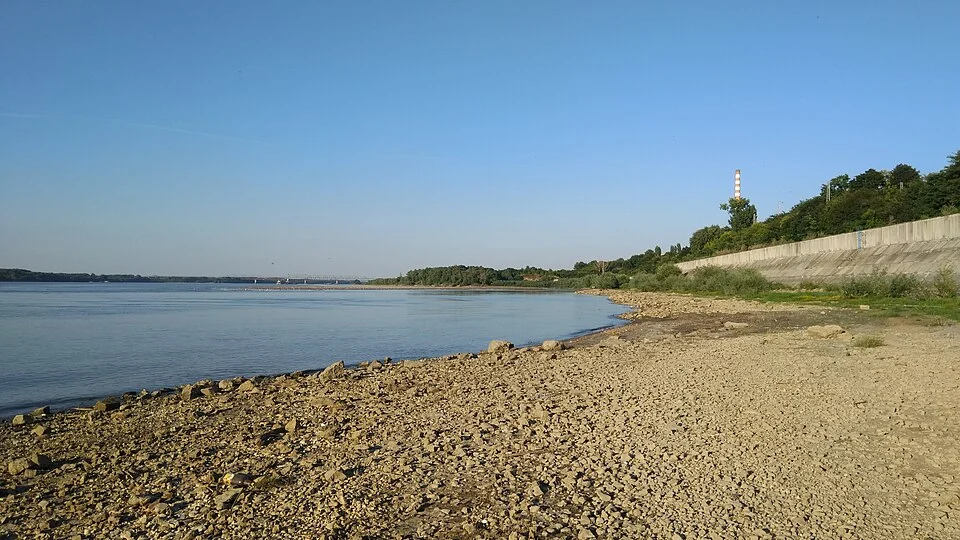
On national radio, the historian Veselina Antonova explains that in 1864 Ruse became the administrative center of a wide region, that residents brought furnishings and ways of living back from Western Europe, and that professionals were welcomed from across Europe. Islyah Khane had a garden overlooking the Danube, where dinners and balls were held. Behind the hotel’s recurring appearance in stories about the chocolate cake lies the life of a port town, where guests and craftsmen arrived from outside by way of the river.
According to one tradition, the cake was served to guests received by Alexander of Battenberg, Prince of Bulgaria. Local press reports, however, note that the same hotel also received distinguished guests under the next ruler, Ferdinand, and suggest that the cake may have been presented in that period. No contemporary record has been found showing garash on the menu on the day in question. For 1885, the year the town celebrates as its origin, there are records linking the hotel and the confectioner. It was also reported that Kosta’s original recipe survives in the State Archives in Ruse. In a 2020 interview with Bacchus, however, the archive said that it holds several walnut cake recipes but has no information identifying any of them as Kosta’s garash. The national television report likewise did not confirm that his own recipe survives.
Kosta is said to have moved to the capital, Sofia, around 1900 and taken over the hotel Panaf. In a recollection presented by Utro, European-style pastries could be enjoyed with coffee or cocoa in the café downstairs. The paper also takes up the theory that at Panaf, Kosta and a person named Kenda devised the garash torta. Both accounts, that the cake was presented in Ruse and later sold in Sofia and that it originated in Sofia, feature Panaf, a hotel with a café. The clue to how the cake spread before it appeared in print in the 1930s lies in the records of his running hotels in the two cities.
The Difference in a Slice and the Day the Town Gathers Around a Round Cake
Compared with the Sachertorte, which is likewise covered in chocolate, the stripes in a slice differ. In the approximate recipe published by Hotel Sacher, a chocolate batter containing egg yolks and flour is baked in a single pan, cut horizontally and spread with apricot jam. Garash is built in layers: thin nut sheets are baked one at a time and joined with chocolate cream into many tiers. Between the Sacher’s thick sponge layers there is the tartness of fruit, while in garash’s fine stripes the walnut crumbs and the softness of the cream alternate at short intervals.
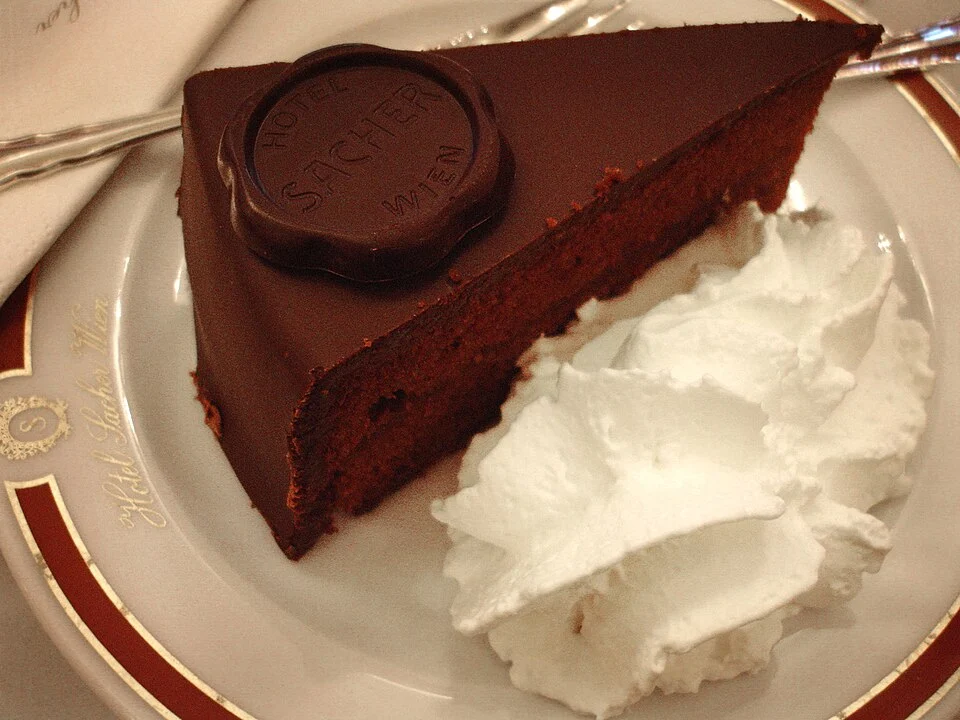
A report by the city of Ruse describes a garash festival held in 2022. At later events, local pastry shops also took part in the organization, and on 14 September 2024 a competition was held in which home bakers could also enter. Entries were divided into categories for traditional recipes and for personal interpretations, and the city reports that on that day local pastry shops sold about 900 garash cakes. The fourth festival, on 13 September 2025, had a logo marking the 140th anniversary. The chef Ivan Aleksandrov was announced to lead a children’s pastry workshop and a demonstration of assembling garash in a modern style, and Daria Rusanova a chocolate demonstration. Some people donate recipes for cakes with many baked walnut discs from their homes to the museum, and at the festival some people assemble those layers with their own hands. In a slice met in town, the choices of those who recreate the old method remain alongside those of people who have tried new ways of making it.
Glossary
- Kosta Garash (Коста Гараш)
- A confectioner said to have been involved in running a hotel in Ruse in the late 19th century and later to have moved to Sofia. His name survives in the cake.
- Alexander of Battenberg
- Prince of Bulgaria. He figures in the tradition that garash torta was served to guests he received at Ruse.
- Couverture
- Chocolate melted in pastry-making and used for creams and coatings.
- Glaze (glaçage)
- The coating that covers a cake. In this confection, chocolate melted separately from the cream inside is poured over it.


