


SweetloreEncyclopedia of World Sweets (834)

Grater Cake
Grater cake
A Jamaican sweet with white and pink layers and the fibers of grated coconut left in
Cakes / Jamaica

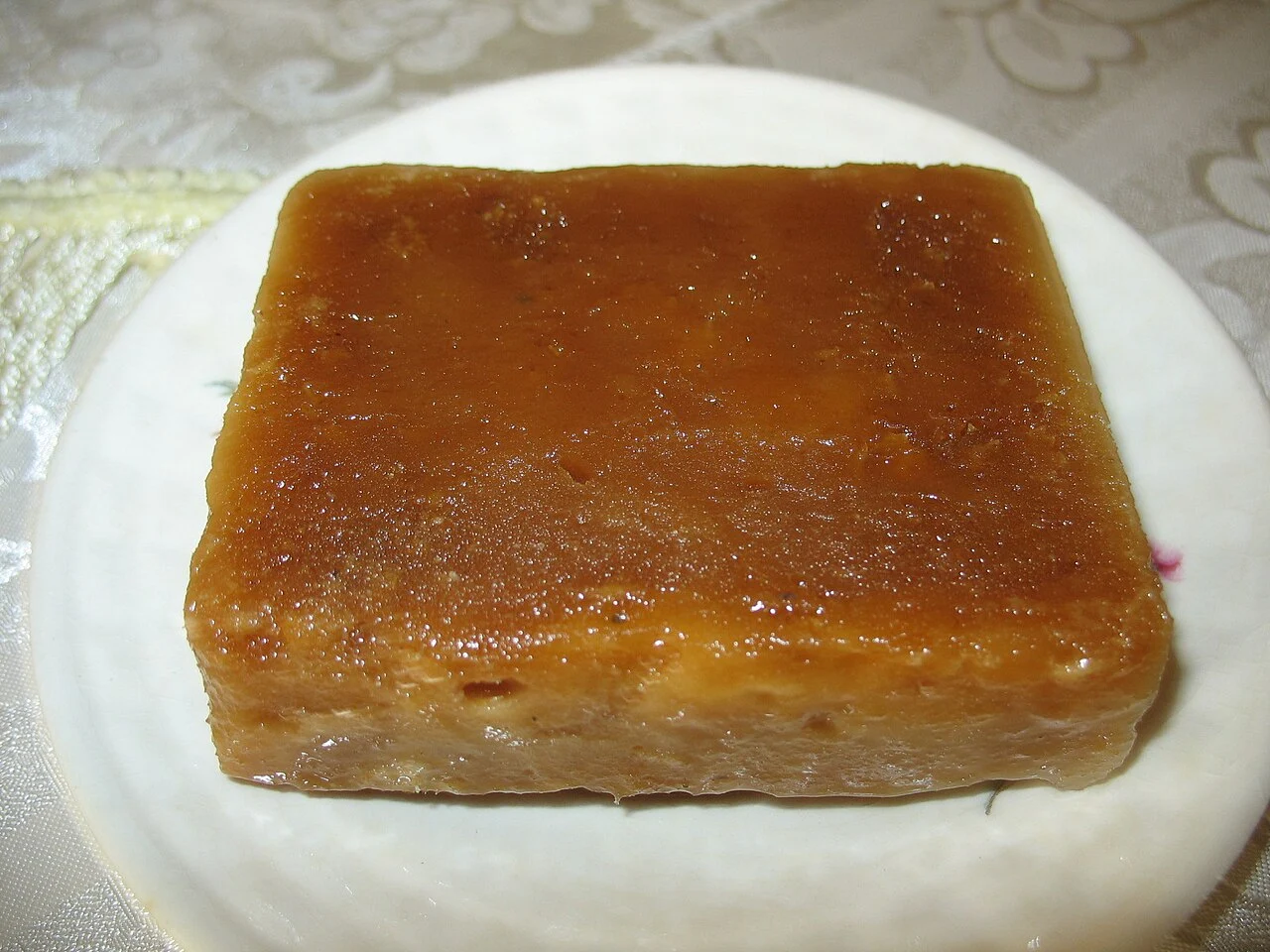
Grater cake is a Jamaican sweet made by grating coconut flesh, boiling it with sugar and setting it into a slab. It is best known for a version whose cut edge shows a white lower layer and a thin pink upper layer. The firm sugar gives way under the teeth, and fine strands of coconut remain in the mouth. To make the layers, the cook divides a single pot of the cooked mixture partway through and colors only the portion for the top.
Because pink is laid over a white slab, Jamaican tourism guides also present the sweet under the name Pink on Top. Island speech recorded in the 20th century preserves, besides grater cake, which is set as a slab with white sugar, grater brute, which uses a sugar rich in molasses.
Building Differently Colored Layers on a White Slab
About two-thirds of the hot mixture is moved to a baking sheet and, while it can still spread, leveled to a thickness of about 2 cm. In the Grace Foods method, red food coloring is mixed into what remains in the same pot and spread over the white with a spoon. If the mixture begins to set in the pot, add a very small amount of water and stir in the color. Even after the white lower layer has been turned out, the remaining mixture is layered on while watching how it cools.
The pink layer is not made by boiling sugar and coconut flesh from the start in a separate pot. Because a single mixture, cooked once, is divided partway through, the layers differ in color but contain the same kind of coconut flesh above and below.
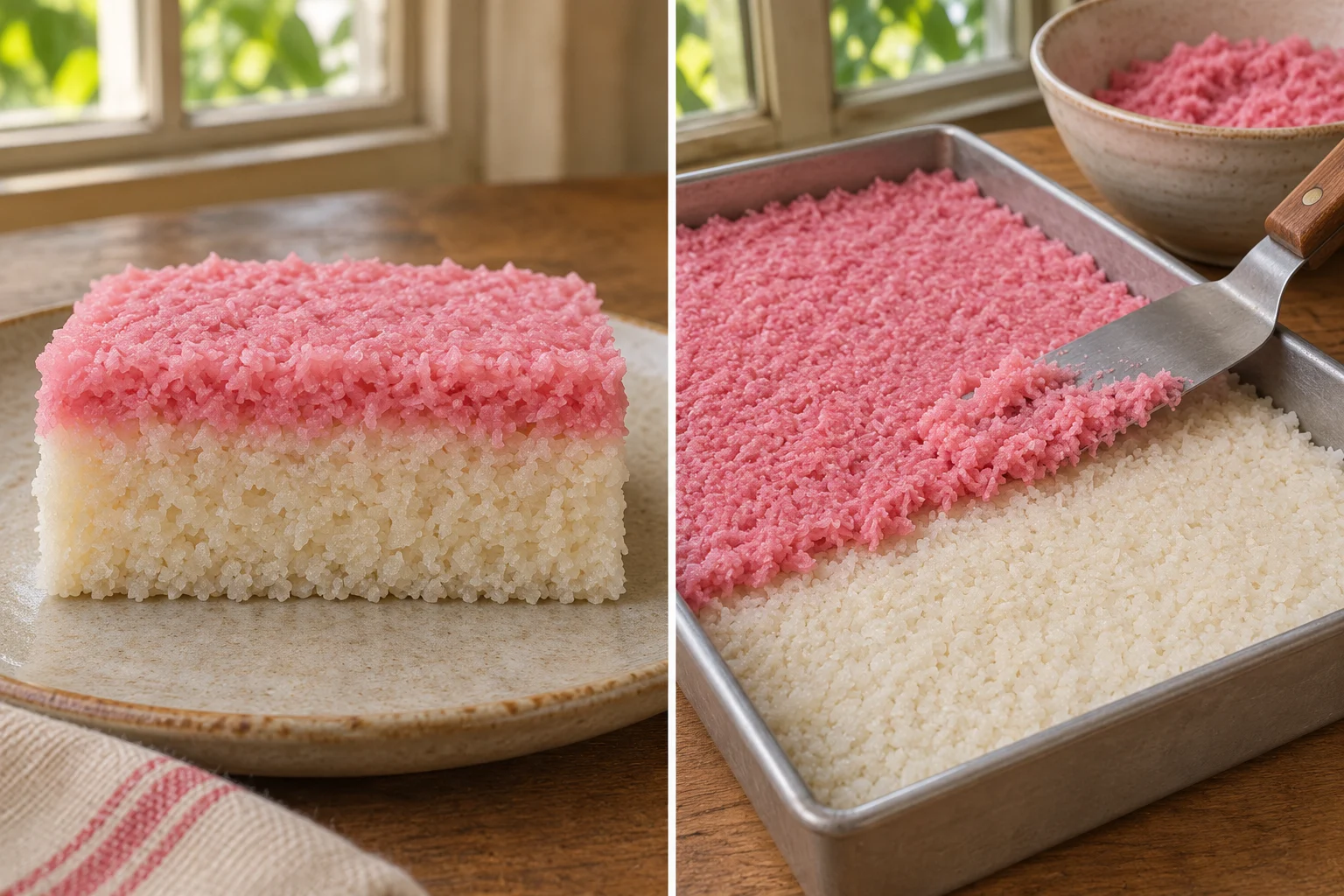
Once the slab has cooled completely, it takes force to cut with a knife. Grace Foods gives a method of cutting it into squares or rectangles with an oiled knife while it is still warm. Cutting to a uniform width and then letting the pieces cool at room temperature yields single portions that keep the boundary between the white and the pink in cross-section.
The Jamaican tourism guide likewise ties the name to the practice of coloring a white coconut sweet and placing the pink on top. Unlike coconut drops, which are set in round spoonfuls, this sweet is spread out in a large, flat sheet and then cut into pieces that can each be picked up by hand.
Keeping the Coconut Fibers and Boiling the Sugar Down
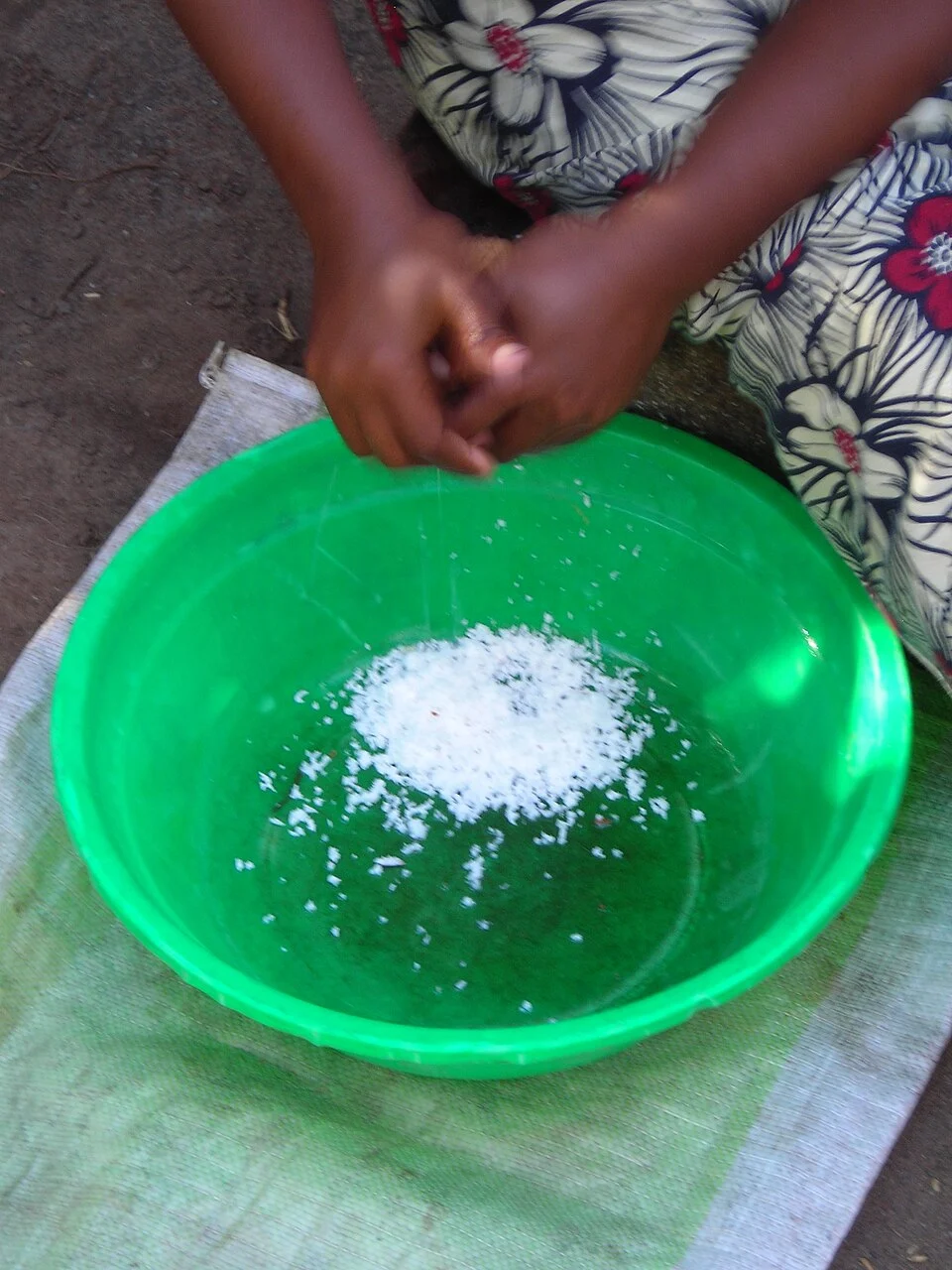
A grater is the kitchen tool of that name. In drops, diced pieces of coconut meet the teeth one at a time; here the flesh is reduced to fine strands and scattered through the melted sugar. On a cut piece, fine white fibers mixed into the sugar are visible.
Even with the same coconut, the contents differ depending on the stage of growth on the tree at which the nut is used. Cassidy distinguished the clear water inside a young fruit from the white coconut milk pressed from the grated flesh of a ripe, hardened nut.
Grater cake uses the flesh itself, removed from the hard shell. There is no step in which the milk is pressed out and discarded; the white fibers stay in the sugar, so fine grains are visible even on a squared-off cut surface. Some recipes list dried coconut as well as ripe fresh flesh, but in either case what goes into the pot is coconut with its fibers intact.
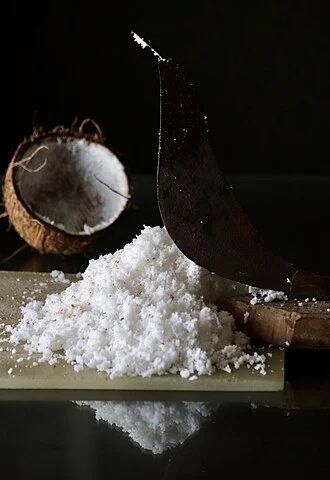
Clinton Hutton, who studied Jamaican tables, likewise distinguished the two: grater cake is made by boiling grated flesh with white sugar, while coconut drops use flesh cut into larger pieces. The difference in the mouth begins even before the mixture finishes cooking, with the tool and the hand motion used to cut the flesh.
In the Grace Foods Kitchen method, granulated sugar and water go into a heavy pot and are stirred over medium heat until the sugar dissolves. Once no sugar grains remain, stop stirring and raise the temperature to about 115°C without stirring. The coconut goes in only after this syrup has reached enough thickness.
If you have no thermometer, the guide is that a small amount of syrup dropped into cold water forms a soft ball that can be pressed with the fingers. At this point the coconut has not yet been added. Rather than judging when to take the pot off the heat by the look of the hot syrup alone, use how firm the syrup becomes when it is suddenly chilled in cold water as the cue before adding the next ingredients.
Add the grated coconut all at once with the vanilla and cinnamon, then stir well over medium heat. Five to eight minutes is the guide for this recipe; cook until the mixture thickens and pulls away from the sides of the pot. The syrup is left undisturbed while it boils first, and once the coconut is added it is stirred evenly in the pot, so the work changes within the same sweet.
If the mixture is spread immediately after the coconut is added, it runs because there is too much sugar liquid. Once it has been boiled down and taken out, it is closer to a state that holds the thickness to which it is spread with a spatula.
If the pot is taken off the heat too early, the sweet stays sticky even after spreading. Conversely, the same recipe explains, overcooking makes it grainy and hard. In the pot, you watch for the coconut-laden mixture to pull away from the sides; on the baking sheet, you use the time it takes to spread flat to finish it in two colors.
Hutton’s account likewise says that white sugar and grated flesh are boiled until sticky and that the sweet hardens as it cools. While heavy in the pot the mixture can still be stretched, but the cooled sweet becomes firm enough to pick up. What affects the texture is not baking time but how far the sugar is boiled and when the coconut mixture is spread.
Brown Sugar and Other Forms of Coconut Sweet
Frederic G. Cassidy’s Jamaica Talk gives grater cake and grater brute as names for sugar sweets made with grated coconut. Some people, it says, reserved the name grater cake for the kind set in a flat dish with white sugar and cut into rectangles.
In Cassidy’s explanation, when coconut sweets are discussed, a moist sugar rich in molasses is called wet sugar or new sugar. The record of speech, first published in 1961, shows that a way of speaking survived in which the type of sugar was also reflected in the name of the dish.
B. W. Higman, a historian of food culture, also notes that grater cake has a version made with a less refined, molasses-rich sugar, and that white sugar later came into wide use.
With white sugar, the pale color of the grated flesh is more likely to remain, and when only part of the mixture is colored, the boundary between the two layers shows. With a brown sugar that contains molasses, the flesh is coated in colored sugar, so even with the same grated coconut the sweet does not take on a white-and-pink look. The sources let us read separately the name of the sugar, the color of the cut surface, and the molasses flavor overlaid on the aroma of the coconut.
In a tourist-oriented food record that Higman cites, grater cake and cut cake, made with chopped coconut, appear side by side as sweets that use coconut and sugar. Wet sugar, which appears in the same record, is described as a soft sugar with the aroma of molasses.
There is also Busta, a brown and chewy sweet. The bosta Hutton describes is made by boiling grated coconut with molasses; it is very sticky and takes effort to chew. Because color alone, brown or white, does not tell the names apart, the clues are how the flesh was reduced, what kind of sugar set it, and how much chew was left.
Grater cake is built from its ingredients differently from cakes made by baking a flour batter until it rises. In the Grace Foods recipe, the main ingredients are sugar and grated coconut, and there is no step of adding flour or eggs. The baking sheet is not a cooking tool here; it is the place where the hot sugar and coconut are spread into a slab.
Hutton describes the gizzada filling, for which coconut is grated in the same way, as finished softer than grater cake and put into a small pastry shell. Whereas gizzada keeps its shape through a baked shell, grater cake relies on sugar that firms as it cools to hold its cut shape.
A Piece Sold Near the School and in the Square
In his recollection of Little London in western Jamaica, covering life he saw and heard of up to 1948, Ralph Ottey writes that Florence Davis, who ran a small grocery in the square, sold grater cake for a penny. A corn sweet was priced at a halfpenny.
At Della Cockett’s nearby shop, fried saltfish, corn pone, grater cake and coconut drops were well known, and children from the Wesleyan school are said to have come often. No pot recipe is given, but it conveys that these were individual sweets a child could buy at a shop.
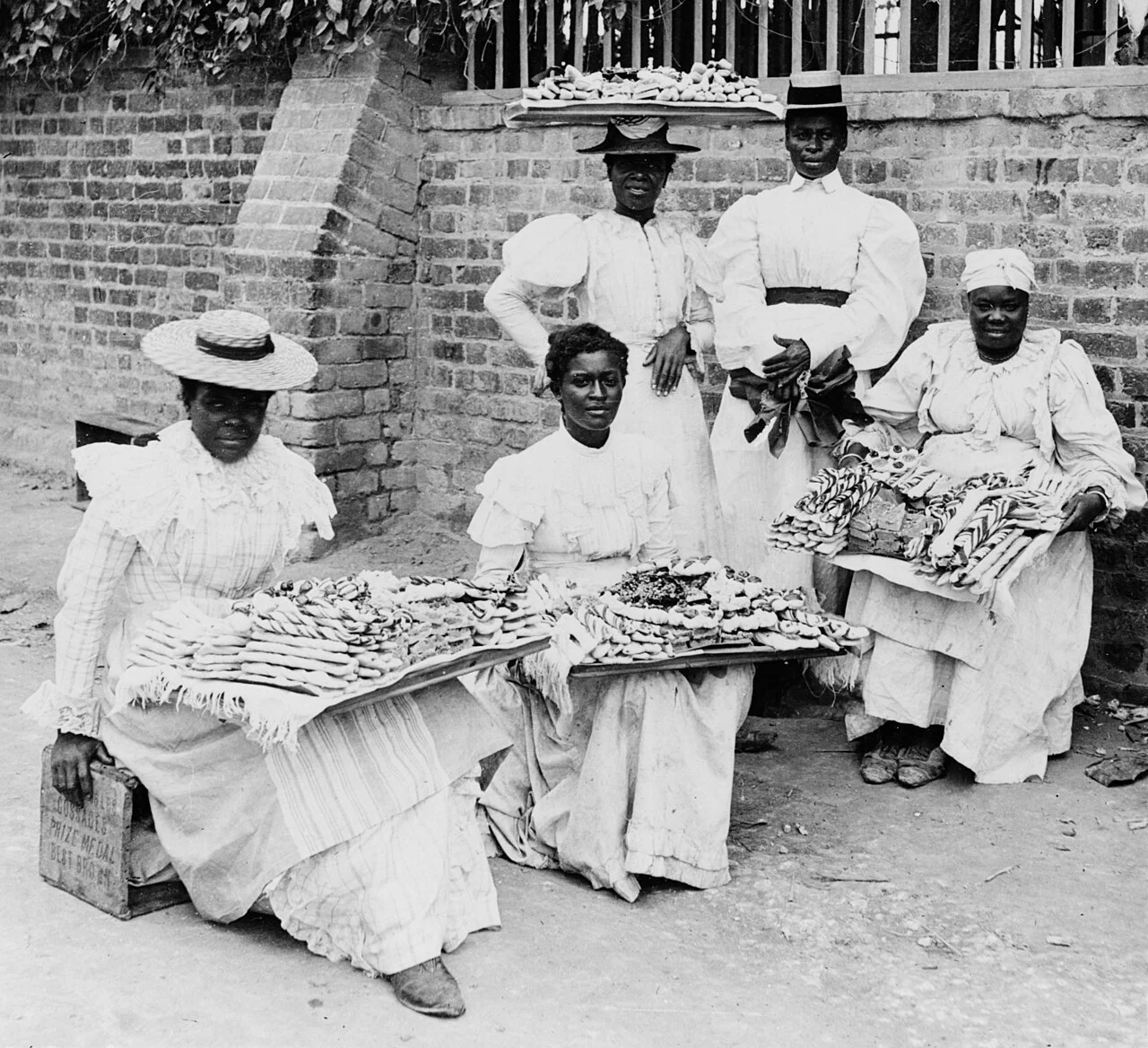
The same recollection also records that Mrs Bernard and her daughter made grater cake, coconut drops and peppermint candy and sold them in the square on Saturday afternoons and evenings. One maker displayed both a sweet made with grated flesh and one made with chopped flesh. A sweet cooled to a firmness that can be picked up can be handed over without a plate or warm sauce.
What Ottey wrote is a later recollection, and it does not say whether there was a pink layer on top of the white. The place names and the sellers’ names, together with the period being recalled, convey the settings in which the sweet was sold.
In 2015, The Gleaner interviewed Dothlyn Clarke, who makes sweets in Cheesefield near Linstead in St Catherine Parish. Known as Miss Shirley, she was especially good at grater cake and drops, as well as peanut sweets, root-crop pudding and toto.
The article, published as Independence Day approached, presented sweets long eaten locally. It is an example, preserved in a local newspaper, of one maker handling both sweets boiled in a pot and set, and sweets made from a batter of flour or root crops.
Early Uses of Coconut Flesh and Sweets for Gatherings
The natural history of Jamaica that Patrick Browne published in 1756 describes grating coconut flesh to make fried foods and small sweets. After discussing eating the fruit, it also mentions using the shell as a vessel and the leaves as roofing.
The 18th-century passage shows that grated flesh was used in sweets, but neither the name grater cake nor the step of setting with sugar and cutting into squares appears there. It can be read as a record of how the ingredient was handled, shared with later sweets, and kept separate in date from the examples that use white sugar and from the shop recollections.
In his study of the tables of Revival, a Jamaican religious practice, Hutton lists drops, gizzada and bosta alongside grater cake, and explains how each is made in the notes. The preparation of the table varies by person and place, and he also records cases in which the dishes offered were shared at the end of the ritual and taken home.
Read alongside the memory of sweets bought and sold, this shows that coconut set with sugar also had a place at gatherings where food is shared with people outside the family.
In the Jamaica Cultural Development Commission’s culinary arts guidelines, grater cake is included in the list for the traditional dishes category. Coconut drops, gizzada, toto and busta are also listed there under their own names.
While names are kept distinct where dishes are being passed on, tourism guides use the alternative name Pink on Top for the white-and-pink look. What links shop memories, dictionary records and present-day methods is the process of grating the coconut, boiling it with sugar, and shaping it while it cools into a form that can be held in the hand.
Glossary
- Grater
- A tool for breaking coconut flesh into fine pieces. The name of the sweet is tied to the step of grating the flesh.
- Wet sugar
- A freshly made sugar rich in molasses, cited by Cassidy, who recorded Jamaican speech. Also called new sugar.
- Soft-ball stage
- The thickness of hot sugar syrup at which a small amount dropped into cold water forms a soft ball. In the Grace Foods recipe, it is the guide for the syrup before the coconut is added.


