


SweetloreEncyclopedia of World Sweets (834)

Texas Sheet Cake
Texas sheet cake
An American chocolate cake with cocoa frosting poured over a single warm sheet
Cakes / United States (Texas)

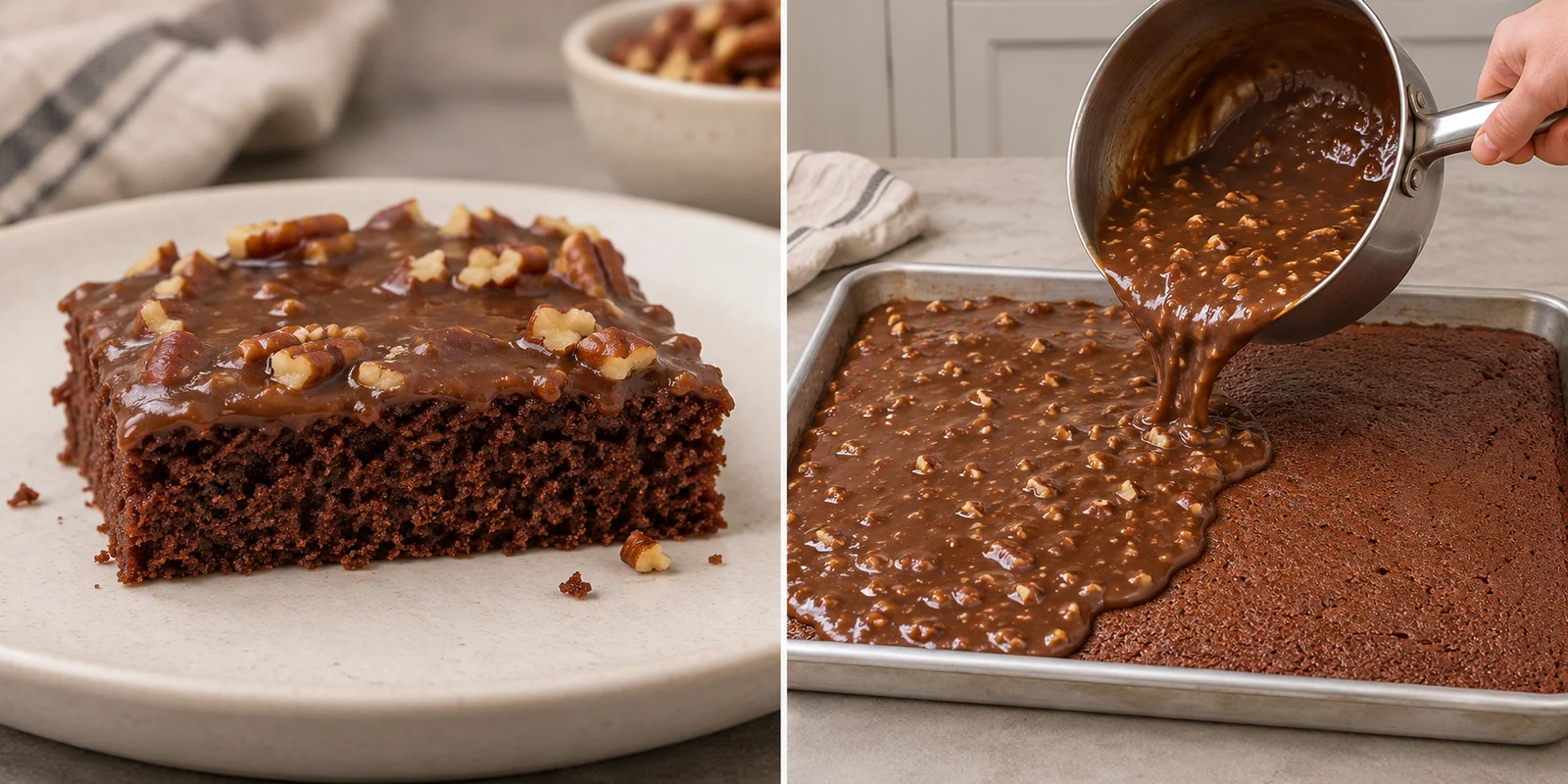
Texas sheet cake is an American sweet made by baking cocoa batter in a single wide pan and pouring cocoa frosting over it while the cake is still warm. Each square slice has a moist, thin layer of cake beneath a sweet top that has cooled and set. Some formulas add chopped pecans to the frosting. Cutting squares from a wide pan gives every piece both cake and topping. The frosting poured on while the cake is still warm settles as it cools and covers the thin cake.
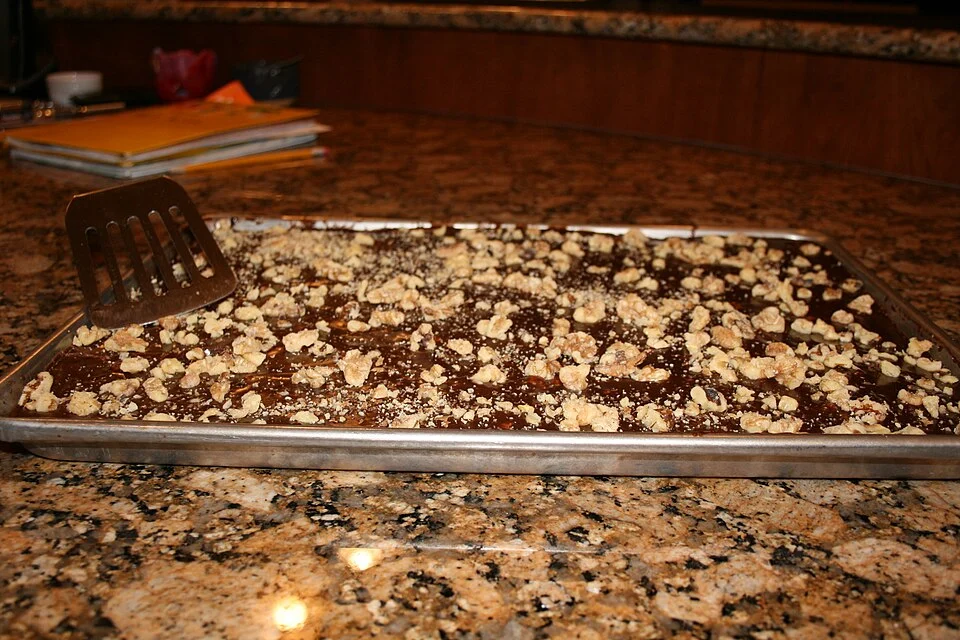
Baking the Batter as a Single Sheet in a Wide Pan
In the Betty Crocker example, flour, sugar and salt are mixed together, and butter, water and cocoa are brought to a boil in a saucepan. The hot cocoa mixture is poured into the dry ingredients, and buttermilk, eggs, baking soda and vanilla are added to make the batter. It is poured into a pan of about 38 × 25 × 2.5 cm (15 × 10 × 1 in) and baked at about 163°C (325°F) for 22 to 25 minutes, until a toothpick inserted in the center comes out free of batter.
There is no step of baking several layers of batter and stacking them afterward. The single baked sheet is finished while it is still in the pan, and that broad surface is cut to suit the number of people.
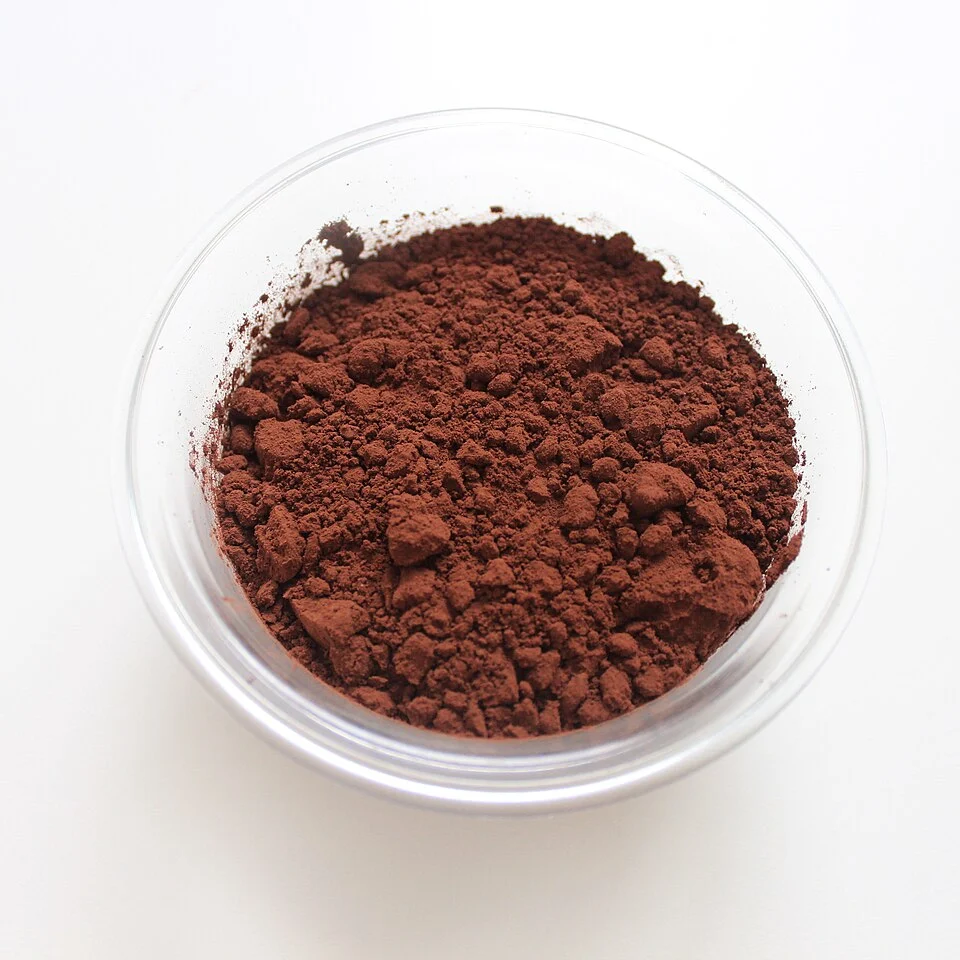
The method of pouring a hot liquid over the dry ingredients also appears in a 1974 cookbook from Pella, Iowa, Dat is lekker kookboek. Cocoa, water and margarine are boiled in a pan and poured into a bowl holding sugar, flour and salt. After the mixture is stirred well, buttermilk or soured milk, baking soda, beaten eggs, vanilla and cinnamon are added.
The cocoa is heated first with water and fat, and the cinnamon goes into the batter afterward. As in the Betty Crocker formula, the hot cocoa mixture is combined with the dry ingredients, but here cinnamon adds to the aroma.
The Pella example gives about 25 minutes at 177°C (350°F) and also shows an alternative bake of 10 minutes at 204°C (400°F) followed by 5 minutes at 191°C (375°F). The page cautions against overbaking. Even in a formula that allows a choice of heat, the step that comes next is the topping on the baked cake. The heat that remains in the baked cake is also a condition when the frosting is spread.
Timing the Bake and the Frosting Pan Together
In the Betty Crocker version, while the batter bakes, butter, cocoa and milk are warmed in a separate pan. Off the heat, powdered sugar and vanilla are stirred in, and chopped pecans are added once the frosting is smooth. It is poured over the hot cake and left for about an hour, until completely cool, before the cake is cut.
Allowing the spread frosting time to cool means the baked cake and its top can be cut out together. The first pan, which warms butter, water and cocoa, and the second, which warms butter, milk and cocoa, hold similar ingredients but serve different purposes.
The frosting in the Pella cookbook is made by boiling cocoa, milk and margarine, then taking the pan off the heat and stirring in powdered sugar and vanilla. Chopped nuts are optional. What the procedure retains is not the use of a particular nut but the spreading of the frosting over the cake while it is hot.
In the Betty Crocker formula, which mixes in pecans, a forkful of a piece meets nuts here and there in the smooth frosting. In the Pella example, if the nuts are left out, the texture of the top comes mainly from the thinness of the frosting and how it sets.
In the Northlake, Texas, commemorative cookbook, Diana Horton’s formula, submitted by Robin L. S. Young, mixes the frosting with an electric mixer, adds chopped pecans, and pours it over the warm cake. For the cake, margarine, oil, water and cocoa are heated and combined with flour, sugar and cinnamon. For the dairy, it does not call for buttermilk but stirs vinegar and baking soda into milk. Cocoa goes into both the cake and the topping, while the chopped nuts are concentrated in the topping and are not mixed into the lower part of the cake.
In the same cookbook, Tammy Wright’s “30-Minute Chocolate Cake” has the frosting poured over the warm cake, with nuts added on top if desired. Horton’s version mixes the pecans into the frosting first, so the place where the nuts can be seen when the cake is served differs from the place where they are met together with the frosting in the mouth.
The Northlake editors wrote that they had received several similar formulas and included them because they differ slightly. Even within a single book, the name of the cake and the order in which the nuts are added are not uniform.
Texas Households and Midwestern Cookbooks
The 1974 Pella book adds “Texas Sheet Cake” beside “Chocolate Sheet Cake.” The contributor line gives one name submitted to the Iowa cookbook and another accompanied by the place name Port Washington, Wisconsin. This shows that, at least by that time, a formula bearing the Texas name was being printed outside Texas.
The step of boiling the cocoa mixture and the instruction to spread the frosting over the hot cake are also there. Read alongside current formulas, they show that not only the ingredients but also the order of topping the cake while it is warm is shared.
The 1982 Midwest Old Threshers Cookbook also includes a “Texas Sheet Cake” from a contributor in Central City, Iowa. A batter with buttermilk and cinnamon is baked on a sheet pan, and the frosting is spread as soon as the cake comes out of the oven. The recipe explains that milk can be added if the frosting is hard to spread.
As in the Pella book, cocoa is used in both the cake and the frosting, and the liquid is heated. In this example, the contributor even left in the cookbook a step of adjusting the amount of milk according to how the frosting flows.
In the 1986 cookbook Note-worthy Recipes, Marlene Armbrecht instructs the cook, once the batter is in the oven, to start the frosting in the same pan in which the cocoa was first boiled. Margarine, milk and cocoa are brought to a boil in the pan, then powdered sugar, vanilla and nuts are added and mixed. The frosting is spread over the cake once it has baked.
The Betty Crocker procedure uses a separate pan. The timing of the start is similar, but which pan is kept free in the home kitchen differs.
The Friona Star, a local Texas newspaper, ran a 2020 article in which reporter Jeri Lynn White introduced the sheet cake her family ate, along with two formulas. In the example Karen King contributed to a church cookbook, sugar, flour, baking soda and cinnamon are combined, and a cocoa mixture boiled in a pan is poured in. Buttermilk and eggs are added, and the batter is poured into a pan of about 41 × 28 cm (16 × 11 in).
The reporter recalls eating a cake made from this formula as a child. The cookbook formula and the account of someone who remembered its taste remain on the same page.
In the same article, the example from Jodi LaFrance’s family mixes the batter ingredients in a single bowl. It can be baked in a sheet pan, or baked thicker in a dish of about 23 × 33 cm (9 × 13 in). For the frosting, milk and butter are boiled, and off the heat, powdered sugar, cocoa, pecans and vanilla are added, and the frosting is spread over the still-warm cake.
The procedures of the two households differ in whether hot cocoa liquid is added to the flour and in how thin the cake is baked. What the family formulas share is that the cake is baked in a single sheet and the frosting is spread while it is warm.
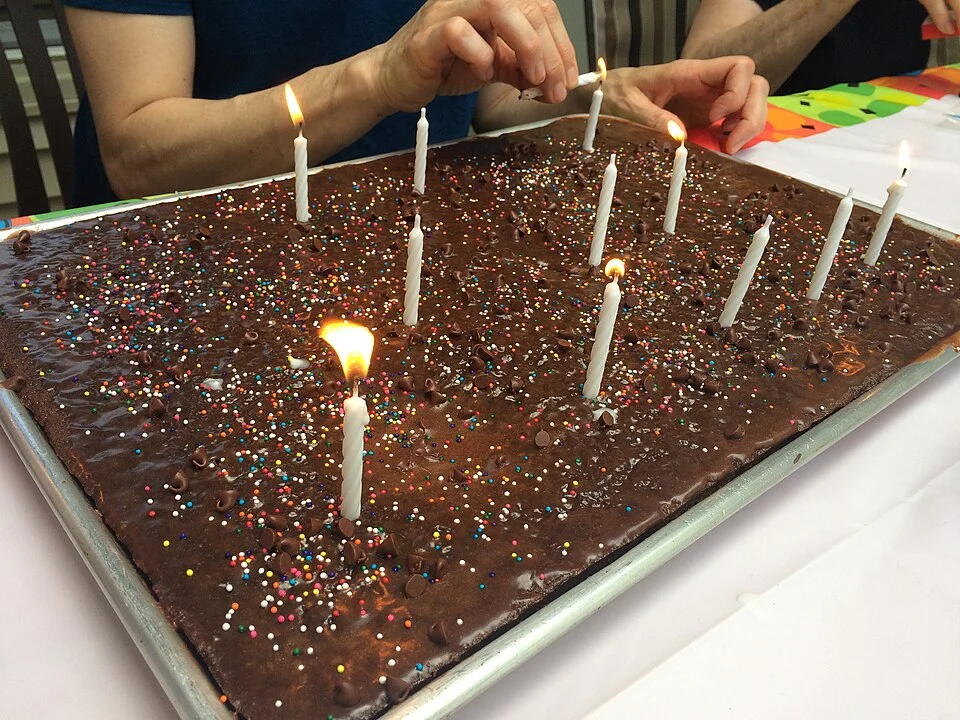
The Northlake cookbook includes contributors’ recollections: Horton made the cake for the birthday of someone working at the post office in Roanoke, and Young, who received the formula, made it for Northlake staff at Christmastime. A cake baked in a wide pan can be cut to match the number of people at a celebration. The Betty Crocker formula also states that it makes 16 pieces and that smaller cuts can serve more people. The cookbook has participants who describe how the cake was used, and the current formula gives a guide to cutting.
Why Both “Sheet” and “Sheath” Survive as Names
A Library of Congress survey presents a large chocolate cake baked in a shallow pan, from the 1936 Galveston Daily News, and “Mrs. Elkin’s Sheath Cake,” printed in a 1967 Alabama cookbook. The latter uses pecans in the topping. The library’s article also relays a recollection by Lenny Angel, who taught cooking: in 1963, before moving to Texas, she learned a formula for “Texas Sheath Cake” in Nebraska.
A shallow pan, a nut topping and similar names appear in separate sources, and the sources do not settle which of them amounts to the invention.
Barry Popik, who has collected usages from newspapers, also cites early examples of “sheath cake” appearing in discussions of other sweets. An example in a 1950 Oklahoma newspaper has small fan decorations, and a 1957 Mississippi newspaper carries one cut into squares and decorated with the names of invited guests.
These records alone do not show whether those cakes are the same as the current cake with a hot cocoa frosting. In later sources, both spellings, “sheath” and “sheet,” are tied to similar chocolate cakes.
A cooking-resource website transcribes “Texas Sheet Cake” as a formula from The Valley Independent of Monessen, Pennsylvania, dated November 19, 1971. It uses sour cream in place of buttermilk and is baked in a pan of about 38 × 25 × 2.5 cm (15 × 10 × 1 in). The frosting directions include boiling milk, cocoa and margarine, mixing them with powdered sugar, and spreading the result over the warm cake.
The original page has not yet been rechecked, but this is a source that lets us trace the fact that a formula of the same name allowed a choice of soured dairy.
The magazine Bake from Scratch has also published an adaptation that makes use of the wide pan: one sheet is cooled and cut into three rectangles, which are stacked with frosting and toasted pecans between them. The formula uses buttermilk and cocoa, along with dark brown sugar and espresso powder.
Compared with the Pella and Northlake examples, which are baked in a pan and handed out piece by piece, this version starts from baking the same kind of sheet but cuts it first and stacks the pieces, so frosting and pecans appear partway through the cross-section as well. The magazine presents it as an adaptation based on the single-layer sweet.
Even for the same single sheet, the aroma that rises when it is cut differs between the Northlake example, where cinnamon goes into the batter, and the Betty Crocker example, which layers the scents of cocoa and vanilla. When the batter is baked thin, the frosting is poured on while it is warm, and the cake is cut into squares once cool, every piece has both cake and topping. Whether the nuts are sprinkled on top or mixed into the frosting, and whether buttermilk is used or vinegar is added to milk, the cooks’ own ingenuity shows even within cookbooks from the same region.
Glossary
- Sheet cake
- A cake baked as a single piece in a shallow, wide pan and then cut into portions. Its size and thickness vary with the pan used.
- Buttermilk
- A sour dairy product. In the Pella cookbook, soured milk can also be used.
- Frosting
- A sweet coating that covers the surface of a cake. For this sweet, there are formulas in which cocoa, milk and fat are heated, powdered sugar is mixed in, and the frosting is poured over the top.
- Pecan
- Here, a nut that is chopped and mixed into the frosting. It adds texture to the sweet.


